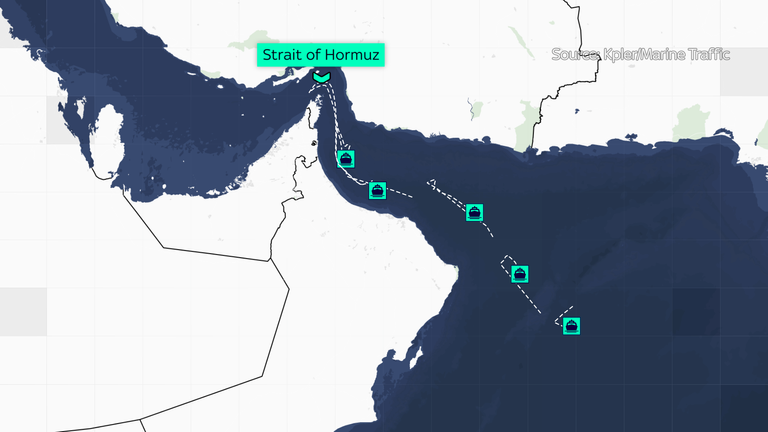
Oil traders are starting to treat President Donald Trump’s optimism about the Iran war like background noise. After weeks of White House reassurance, markets barely reacted to fresh ceasefire talk even as fighting dragged on and the Strait of Hormuz stayed shut, leaving prices to move on barrels and battlefield reality, not speeches.
The credibility gap is showing up in the tape. Crude has surged more than 11 percent since Trump’s latest claims that the conflict is “nearly complete,” a jump analysts say could push US gasoline beyond $4 a gallon. Energy executives and analysts quoted by CNN also describe a longer hangover: Hormuz has been closed for about a month, stockpiles have been drained, and even a sudden exit would not quickly restore the pre-war balance.
That leaves investors and policymakers staring at a set of ugly forks in the road, each with its own price tag, as laid out in analysts’ scenario planning:
- If the US leaves without reopening Hormuz, analysts warn Iran effectively controls a critical chokepoint and oil could stay above $90 a barrel well past the war.
- If the US escalates and targets Iran’s energy infrastructure, the immediate shortage worsens and retaliation risks climb, a recipe for even higher prices.
Politically, sustained high energy costs would collide with the administration’s promise that prices will “plummet” when the war ends, and could aggravate affordability pressures ahead of November. Inside the industry, officials are preparing for months of elevated crude and gasoline prices because the shutdown has already distorted supply chains, and Middle East producers that curtailed output to avoid a Persian Gulf pileup would need time to ramp back up even if shipping lanes normalize, according to industry and analyst comments.