Daily

China's $1.19T Trade Surplus Signals Shifting Global Trade

China's record trade surplus grows 20% as exports rise outside the US amid modest reserve gains.

Published
Est. Read Time
3 min read
China's $1.19T Trade Surplus Signals Shifting Global Trade

Morning, here's what to know before the trading day unfolds.


Market Snapshot

Assets Price 1 Day YTD
SPY $692.24 +0.27% +1.51%
QQQ $621.78 +0.36% +1.22%
DIA $494.48 +0.59% +2.89%
IWM $265.51 +0.88% +7.86%
BTC $95521.73 -0.75% +9.16%
10Y $4.16 +0.48% -0.07%
GOLD $4601.90 -0.47% +6.39%

As of Jan 15, 2026 09:41 PM ET • Data via Yahoo! Finance


Economy

China Records $1.19 Trillion Trade Surplus Amid US Tensions

Article visual for China Records $1.19 Trillion Trade Surplus Amid US Tensions

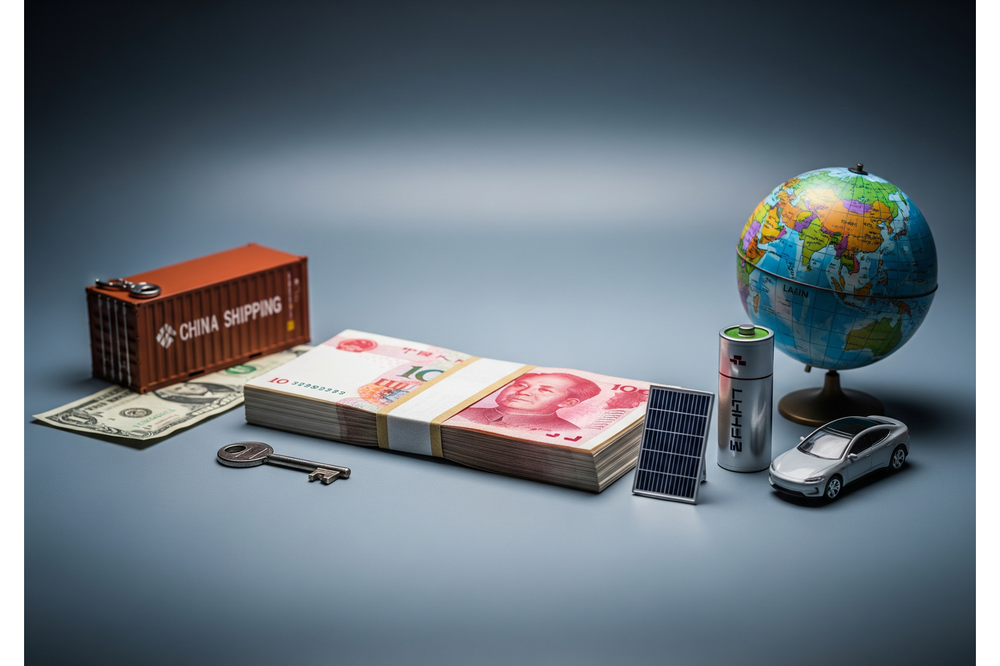
China reported a record-breaking trade surplus of $1.19 trillion for 2025, up roughly 20% over 2024, underscoring its robust export engine despite ongoing US trade frictions. The surplus illustrates China's ability to thrive without heavy reliance on the US market, as exports to the US fell by nearly 20%. Instead, Chinese exporters have pivoted aggressively toward emerging markets in Southeast Asia, Africa, and Latin America.

This massive surplus reflects China's dominance in manufacturing green technologies such as electric vehicles, lithium-ion batteries, and solar panels, alongside machinery and tech product exports. However, this success comes with complications: many countries have erected trade barriers against Chinese goods, and China faces persistent weaknesses in domestic consumer demand.

China's industrial strength and policy support have bolstered exports, but experts warn that reliance on external demand carries risks. The country’s trade momentum could slow if global demand weakens or protectionist measures increase. Meanwhile, Beijing’s trade resilience gives it leverage in negotiations with Washington, reducing pressure to make large concessions amid ongoing tariff discussions.

Tracking China's trade surplus growth is essential, as it showcases shifting global supply chains and China's increasing economic influence amid complex geopolitical tensions.


 

Economy

China’s Forex Reserves Rise Modestly Despite Record Trade Surplus

Article visual for China’s Forex Reserves Rise Modestly Despite Record Trade Surplus

Though China recorded a record trade surplus of $1.19 trillion in 2025, its foreign exchange reserves rose by only $160 billion to about $3.36 trillion over the same period. This modest increase — just 13% of the surplus — indicates that most earnings from exports did not remain with the central bank.

The discrepancy arises because much of China’s trade is settled in yuan or other currencies, not US dollars, reducing direct dollar inflows. Additionally, substantial outbound spending on overseas investment, profit repatriation by foreign companies, and expenditures by Chinese tourists and students abroad exert pressure on reserve balances.

Significantly, a large portion of China’s foreign assets generated by trade surplus ended up in private hands and state-owned enterprises overseas, exposing China to risks of sudden capital outflows especially if the yuan strengthens. This subtle shift in where surplus funds flow underscores the complexities in China’s external sector and challenges in managing currency and financial stability.

Investors should watch China’s evolving capital flows dynamics closely, as shifts could influence global currency markets and the stability of China’s forex reserves.


Geopolitics

China's Trade Surplus Reshapes Global Manufacturing Landscape

Article visual for China's Trade Surplus Reshapes Global Manufacturing Landscape

China’s enormous trade surplus is not only an economic marker but a strategic lever reshaping global manufacturing and supply chains. With exports growing rapidly outside the US—partly due to tariffs imposed by Washington—China is reinforcing its role as the world’s manufacturing hub.

This creates a dilemma for the US and its allies: as China becomes indispensable for critical components and goods, alternatives dwindle. Experts warn that as countries like Germany, France, Japan, and South Korea lose industrial capacity, building a supply chain free of Chinese influence becomes increasingly difficult.

The US administration's ambitions to bring manufacturing back and diversify supply sources face an uphill battle as China’s integration in global production deepens and its goods undercut competitors abroad. Meanwhile, small and developing countries hesitate to challenge China overtly due to fears of trade retaliation and dependency on Chinese rare earth exports.

Monitoring these evolving supply chain dynamics is crucial, as they will affect trade policies, geopolitical bargaining power, and global economic balance over the coming decade.


What to Watch Next

Key Indicators to Monitor in China-US Trade Dynamics

  • Watch China’s export growth pace outside the US, signaling shift in trade partnerships.
  • Monitor forex reserve changes and yuan strength for insights into China’s capital flows and currency policy.
  • Follow US-China trade negotiations and tariff updates ahead of possible diplomatic visits.
  • Track new trade barriers or tariff adjustments from the EU, Canada, and Mexico impacting Chinese goods.
  • Observe shifts in manufacturing investments in Germany, Japan, and South Korea related to supply chain reconfiguration.

Keep reading