|
Morning, from interest rates to earnings — here's what to watch.
|
|
Market Snapshot
| Assets |
Price |
1 Day |
YTD |
| SPY |
$693.77 |
-0.20%
|
+1.74%
|
| QQQ |
$626.24 |
-0.15%
|
+1.94%
|
| DIA |
$491.94 |
-0.80%
|
+2.37%
|
| IWM |
$261.35 |
-0.06%
|
+6.17%
|
| BTC |
$95029.84 |
+3.07%
|
+8.59%
|
| 10Y |
$4.17 |
-0.38%
|
+0.19%
|
| GOLD |
$4640.60 |
+0.90%
|
+7.28%
|
As of Jan 14, 2026 05:34 AM ET • Data via Yahoo! Finance
|
|
Economy
|
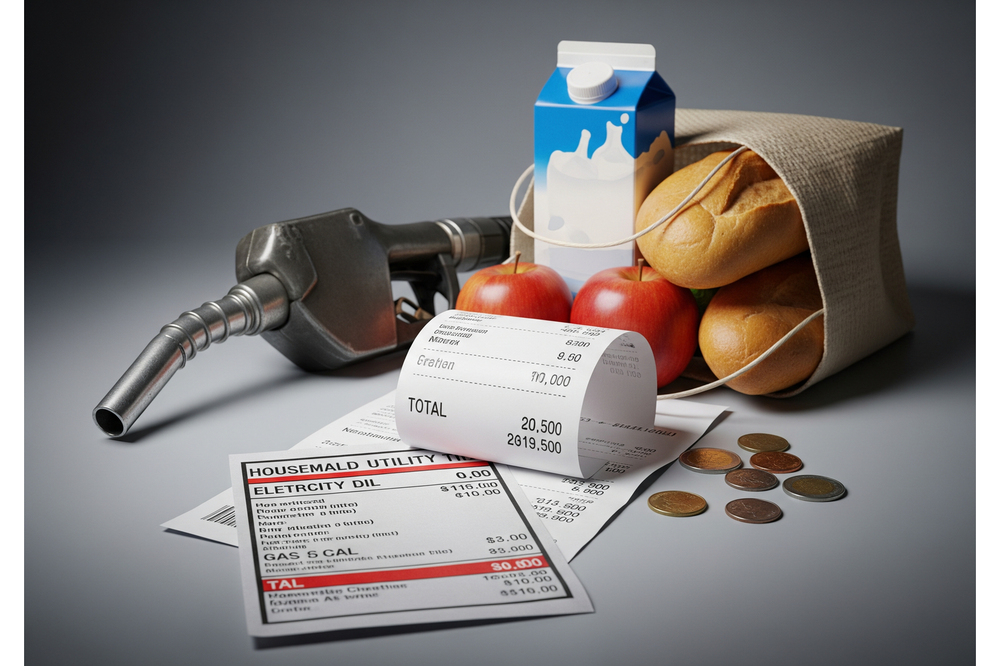
U.S. inflation didn’t re-accelerate in December, but it also didn’t meaningfully cool. According to Consumer prices up, the consumer price index (CPI) rose 2.7% year over year, unchanged from November and broadly in line with expectations. The Federal Reserve targets roughly 2% inflation over time, so the question is less “are we back to normal?” and more “how long until the last mile?” Where the report bites is in everyday categories that shape sentiment and politics. Food prices rose 0.7% month over month in December, the fastest one-month grocery move in years, with overall food inflation running 3.1% year over year and grocery prices up 2.4% year over year, per food prices data. Energy-adjacent bills were also noisy. Utility piped gas rose 4.4% m/m and was up 11% y/y, while electricity was up about 7% y/y, per utility inflation details. The “why” is a mix of policy and measurement. Economists cited tariffs adding upward pressure and argued pass-through has been muted because some firms are absorbing costs in margins. At the same time, the fall government shutdown (Oct. 1 to Nov. 12) distorted collection, forcing the Bureau of Labor Statistics to assume flat prices for many categories in October. That makes month-to-month comparisons trickier and may exaggerate the apparent December snapback, per shutdown distortions. Next steps: markets and borrowers should expect the Fed to stay cautious near term, with any 2026 easing dependent on whether core inflation keeps gliding lower and whether “necessities inflation” cools without a growth scare. Price relief may come more from housing, where rent growth is described as weak, than from groceries or utilities. Position for a slower, bumpier disinflation path than the headline suggests.
|
|
Markets

|
The December inflation story is increasingly about distribution, not averages. While economists highlighted stabilization in core inflation (excluding food and energy), the categories most visible to households. groceries, utilities, and health care. kept climbing, worsening a “K-shaped” economy where higher earners stay comfortable and everyone else absorbs the squeeze, according to rising necessities costs. The who and where: lower-income households, which spend a larger share of income on food and energy, are taking the brunt as staples rise. NBC notes electricity prices were up nearly 7% last year and natural gas posted double-digit gains, while grocery increases were broad-based in December. Meanwhile, Bank of America data cited by NBC says the top 5% of consumers drove the bulk of spending gains through late 2025, continuing to spend on travel and dining while lower-income consumers pulled back on nonessentials like hotels and entertainment, per top 5% spending. Why it matters now: this split can keep headline growth afloat even as the median household feels worse off. That’s a sharp setup for policy risk in 2026, because political pressure tends to focus on the highest-visibility prices. The White House is already leaning into affordability messaging. President Trump pitched affordability as a top priority in a Detroit Economic Club speech and has floated actions ranging from mortgage bond purchases to a temporary credit card rate cap, per affordability push. How this hits markets and business: if consumption increasingly relies on a narrow high-income cohort, retailers, travel firms, and discretionary brands may see bifurcated demand. Premium holds up, value competes harder. At the same time, the Fed can’t cut aggressively if “necessities inflation” keeps re-asserting itself. Cutting too fast risks re-igniting price pressures, but holding too long risks labor-market downside. Both outcomes raise volatility in consumer-facing earnings. What to do with it: watch whether staples inflation cools in Q1 without a meaningful jobs deterioration. If not, expect louder political moves on affordability and more uneven consumer demand. Portfolio and planning decisions should lean into resilience. pricing power and balance-sheet flexibility. rather than assuming a broad-based consumer reacceleration.
|
|
Geopolitics

|
China reported a record trade surplus in 2025, underscoring how its growth model is still leaning on exports even as tariffs bite. Chinese customs data showed a surplus of about $1.189 trillion, with full-year exports up 5.5% to $3.77 trillion while imports were roughly flat at $2.58 trillion, per record trade surplus. In December, exports rose 6.6% year over year and imports rose 5.7% year over year, beating forecasts, per December export beat. The why: demand at home remains soft, partly tied to a prolonged property downturn, so policymakers and manufacturers are pushing harder into overseas markets. Even with exports to the U.S. down about 20% in 2025, shipments to other regions rose sharply, including Africa up about 26% and ASEAN up about 13%, per exports shift. Analysts also pointed to chips, electronics, autos and other industrial categories as key support. The immediate impact is geopolitical. A surplus of this size intensifies fears in Europe, North America and parts of Asia that domestic industries will be undercut by a wave of lower-cost imports, raising the odds of fresh trade barriers. Reuters highlighted that U.S. duties remain elevated and that Trump is signaling additional tariff threats tied to Iran trade, which could broaden the fight beyond bilateral U.S.-China issues, per tariff threat. Likely next steps: expect more anti-dumping probes, targeted tariffs, and “rules-of-origin” scrutiny as countries try to prevent tariff bypass via third-party shipping routes. Beijing is also signaling it understands the optics. including calls to expand imports. but concrete domestic-demand rebalancing remains the bigger missing piece, as the IMF has urged, per IMF imbalance warning. How to use this: treat the record surplus as a leading indicator of trade-policy risk in 2026. Companies with China-exposed supply chains or pricing-sensitive end markets should stress-test scenarios for new duties, longer customs delays, and tighter export controls.
|
|
Policy

|
Canada is attempting a high-wire reset with China as U.S. trade uncertainty rises. Prime Minister Mark Carney arrived in Beijing on Wednesday for a three-day visit aimed at repairing relations and easing retaliatory tariffs that have squeezed key Canadian exporters, per three-day visit. It’s the first visit to China by a Canadian prime minister since 2017, a sign Ottawa sees economic urgency overriding years of diplomatic freeze. The immediate catalyst is leverage. Chinese customs data released ahead of the trip showed China’s imports from Canada fell 10.4% in 2025 to $41.7 billion, down from $46.6 billion in 2024, per imports slump. That decline lands as Carney tries to diversify markets after Trump-era tariffs and sovereignty rhetoric have darkened Canada’s U.S. outlook, per U.S. outlook darkens. What’s on the table is politically loaded: agriculture access versus electric vehicle policy. The rift widened in 2024 when Canada imposed 100% tariffs on Chinese-made EVs, and farmers have been hit by Chinese counter-tariffs on products including canola. Canadian industry groups want relief but disagree on tradeoffs. Farmers are pressing for certainty that China returns to the canola market, while automakers warn against any concessions on Chinese EV access, per tariff standoff. How this could evolve: negotiations may yield partial, sector-by-sector easing rather than a grand bargain. The risk is Canada gets squeezed between China’s demands and U.S. security and industrial policy expectations. That matters because Canada faces a mandatory Canada–U.S.–Mexico Agreement review in July, increasing the cost of any move that looks like opening North America to Chinese EVs, per July review. What readers should do: if you’re exposed to Canadian agriculture, autos, or cross-border manufacturing, plan for a messy, incremental thaw rather than a clean reset. The visit is a signal that trade policy is becoming more transactional, and supply chains should be positioned for sudden tariff swings.
|
|
What to Watch Next
- Next CPI prints: does headline inflation stay near 2.7%, and do food and utilities cool from December’s spike?
- Tariff pass-through: watch apparel and imported goods prices for delayed increases as firms stop absorbing costs.
- Fed reaction: listen for “extended pause” language versus openness to cuts if labor weakens.
- China trade retaliation: monitor new anti-dumping probes or tariff announcements tied to China’s $1.2T surplus.
- Canada-China talks: any sign of partial tariff relief for canola without movement on Canada’s 100% EV tariffs.
|
|
|
|