|
Morning, today's markets and economic pulse in a few beats:
|
|
Market Snapshot
| Assets |
Price |
1 Day |
YTD |
| SPY |
$687.72 |
+0.67%
|
+0.85%
|
| QQQ |
$617.99 |
+0.79%
|
+0.60%
|
| DIA |
$489.77 |
+1.27%
|
+1.91%
|
| IWM |
$252.73 |
+1.59%
|
+2.67%
|
| BTC |
$93565.98 |
+0.77%
|
+6.92%
|
| 10Y |
$4.16 |
-0.53%
|
+0.05%
|
| GOLD |
$4459.30 |
+0.18%
|
+3.09%
|
As of Jan 06, 2026 05:33 AM ET • Data via Yahoo! Finance
|
|
Economy

|
Fresh off the Jan. 3 U.S. operation that captured Nicolás Maduro, investors bid up energy names and risk assets on the idea that Venezuela’s vast reserves could be unlocked quickly. President Donald Trump said U.S. oil companies could get production “up and running” in under 18 months and suggested firms could be reimbursed by the U.S. government or through oil revenue, framing it as a path to keep fuel prices low. Reality is more grinding. Venezuela is producing roughly under 1.1 million bpd today after years of mismanagement, nationalizations, and sanctions. Analysts cited by Investopedia’s explainer estimate rebuilding could take a decade and tens of billions in capital because much of the crude is extra heavy and requires specialized equipment, upgraders, chemicals, and constant maintenance. On top of that, producers still have to underwrite political stability and contract enforceability in a country with a history of expropriations. - U.S. pump prices are already low. AAA put the national average at $2.81, the lowest since March 2021, per the NBC interview.
- Venezuela’s potential is enormous but slow-moving. It holds about 303 billion barrels of proven reserves, about 17% of global reserves, per the same AP-syndicated report.
- Scaling back up is capital intensive. One cited estimate: reaching 4 million bpd could take about a decade and roughly $100 billion, according to comments in the same report.
For markets, the near-term catalyst is policy clarity, not geology. Watch whether the White House can credibly de-risk sanctions, contracts, and security fast enough to get Big Oil and oilfield services to commit real capital.
|
|
Markets
|
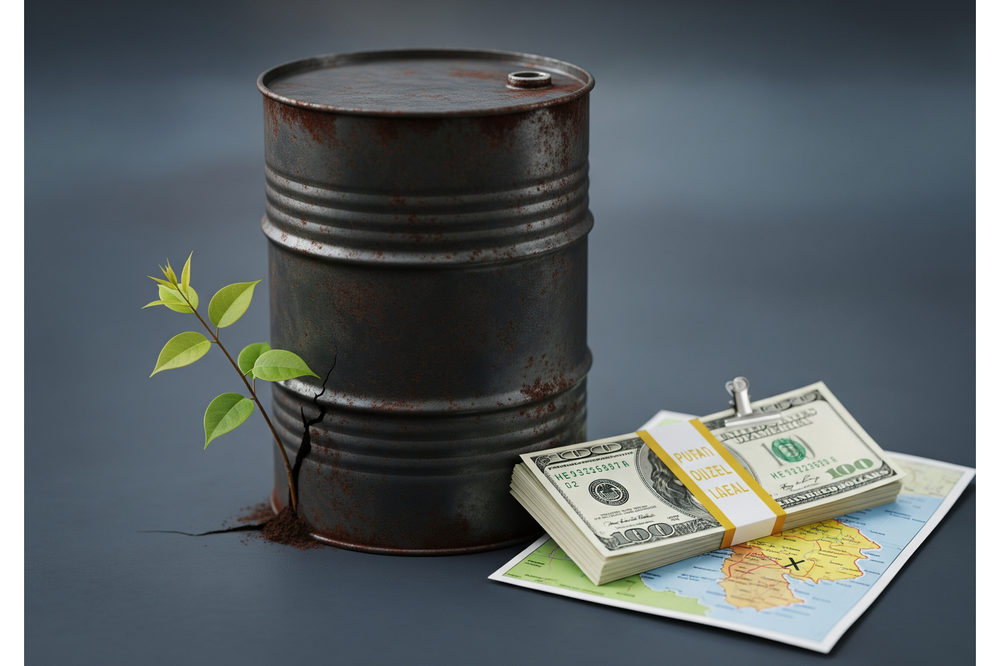
Energy stocks surged after President Trump floated a plan to send U.S. producers into Venezuela and even reimburse rebuilding costs, a proposal he discussed in an exclusive interview. The market’s immediate read: access to the world’s biggest reserves plus U.S. logistical muscle could reshape heavy-crude supply chains, especially for Gulf Coast refineries designed for heavier feedstock. The first price action was equity-led, not oil-led. Oil markets tend to discount distant supply, and analysts broadly argue Venezuela cannot add meaningful barrels quickly given degraded infrastructure and political risk. Still, investors chased beneficiaries positioned for any reopening: operators with existing footholds, and oilfield services firms that would win early maintenance and workover contracts. - Chevron rose about 5% on Jan. 5, while Exxon and ConocoPhillips gained more than 2%, according to Yahoo’s recap.
- Oilfield services jumped more. Halliburton climbed almost 8% and SLB nearly 9%, per the same market move summary.
- Venezuela’s current production is roughly ~900,000 bpd in one estimate and ~1.1 million bpd in another, highlighting data dispersion and operational instability noted in industry commentary.
Why the disconnect between stock pops and oil price calm: a credible restart requires contracts, security, and sanctions architecture that survives headlines. Analysts also point out that Venezuela’s heavy crude is harder and dirtier to produce, and that global supply is not obviously tight right now, limiting immediate price repricing. If you’re trading the theme, focus less on reserve size and more on what changes cash flows: U.S. licensing, export permissions, payment rails, and whether the situation stabilizes enough for multi-year capex. That’s what determines whether this is a one-week momentum burst or a durable sector rerate.
CVX +5.10%XOM +2.21%COP +2.59%HAL +7.84%SLB +8.96%
As of Jan 06, 2026 05:33 AM ET • Data via Yahoo! Finance
|
|
Policy
|
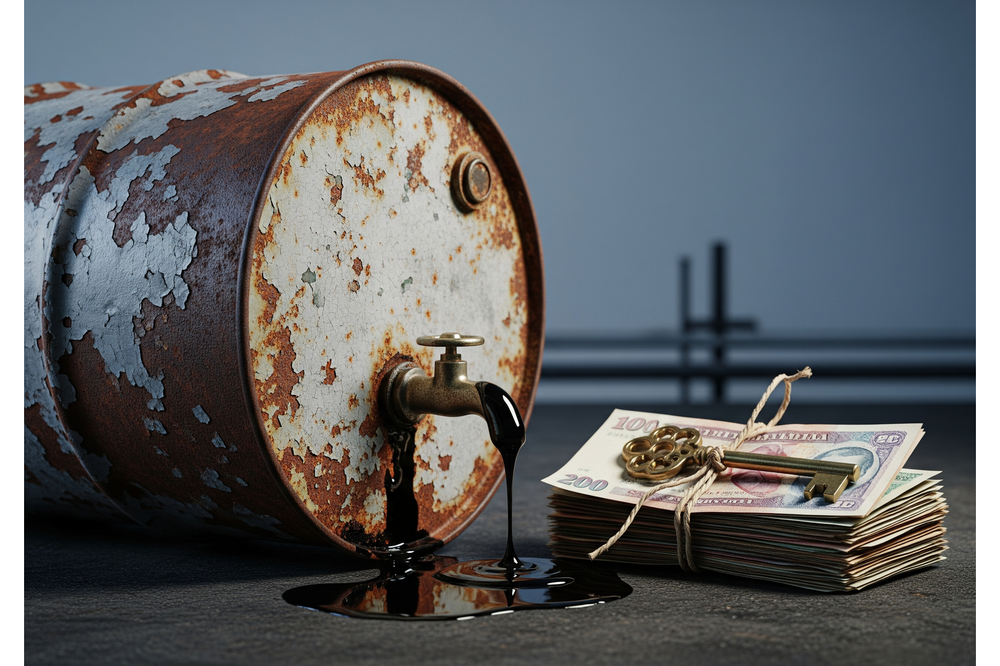
Venezuela’s oil story is back in the foreground after the U.S. moved against Nicolás Maduro and President Trump argued that restarting production could lower oil prices. The backdrop matters: Venezuela once pumped about 3.5 million bpd, but now produces less than 1 million bpd, a collapse tied to nationalizations, sanctions, and deterioration in basic operating capacity, according to a detailed breakdown. The “why” is not mysterious. Much of the country’s crude is extra heavy. It can be closer to asphalt than conventional oil, which means costly extraction and processing, plus imported diluents and chemicals to keep wells and pipelines flowing. When expertise and investment leave, declines accelerate. The same explainer also notes a major talent drain after PDVSA purged roughly 20,000 workers, about 40% of its personnel, hollowing out the technical bench. - Scale is not the constraint. Proven reserves are about 303 billion barrels, roughly 17% of the world total, as cited in the AP-syndicated report.
- Capital and stability are. Analysts cited by Investopedia put rebuilding needs around $80B–$100B over roughly a decade, and that assumes political stability.
Next steps hinge on “how” the U.S. tries to operationalize control: sanctions waivers, contract protections, and payment mechanisms for exports. There’s also the legal overhang of who has the right to sell the oil and sign long-term agreements, a risk that could deter public-company boards even if barrels look profitable on paper. For decision-makers, treat Venezuela as a multi-year optionality story with real tail risk. The near-term macro effect is limited. The bigger question is whether policy choices reduce enough uncertainty to unlock sustained investment without triggering legal, environmental, or geopolitical backlash.
|
|
What to Watch Next
- Monitor any U.S. decision on reimbursing oil firms for Venezuela work, a key premise in Trump’s comments, for implications on fiscal risk and oil capex.
- Track whether Chevron’s Venezuela posture changes. It currently produces about 250,000 bpd there, per reported estimates.
- Watch signs the Venezuela situation disrupts exports before helping supply. Analysts warned output could fall first in industry commentary.
- Follow Fed succession headlines. Reuters flagged Powell’s term ending in May as a key 2026 tail risk driver.
- Keep an eye on inflation sensitivity to policy mistakes. Reuters cited concern that over-easing could reignite inflation above 3.5% as a barrier for cuts.
|
|
|
|