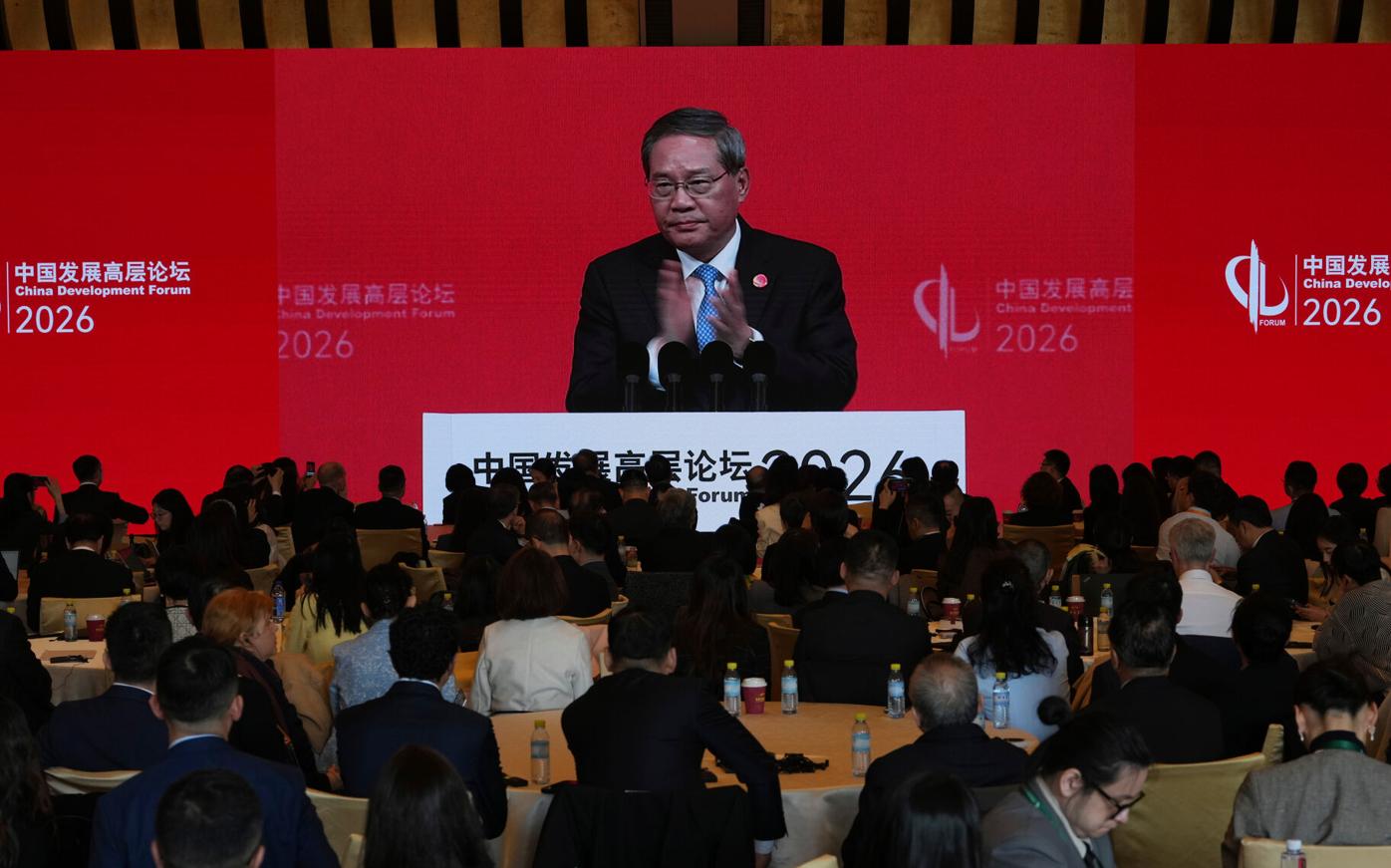
Premier Li Qiang addresses a global audience including corporate leaders at the China Development Forum.
Source: Janesville Gazette
China is trying to sell “stability” just as its trade numbers make it look like the opposite. At the China Development Forum in Beijing, Premier Li Qiang pledged “national treatment” for foreign enterprises and promised a further opening of the economy, a message aimed squarely at multinational executives who are being tugged between China’s market and their home governments’ tougher stance on trade.
The immediate pressure point is the surplus. China is coming off a record $1.2 trillion trade surplus, a figure that has sharpened scrutiny from major trading partners and raised the political odds of tariffs, investigations, and “de-risking” policies. Li’s answer was to promise more imports of “high-quality goods” and talk up “balanced trade development,” framing China as a “cornerstone of certainty” for the global economy. That is an ambitious pitch when the core complaint from partners is not rhetoric, but the scale and persistence of China’s export machine.
For companies, Li’s promise of national treatment is a bid to keep capital, technology, and executives engaged, especially with a heavy-hitter guest list that includes leaders from Apple, Samsung Electronics, Volkswagen, Broadcom, Siemens, BASF, and Novartis. In practice, multinationals will measure “treatment” in licensing approvals, procurement access, data and security rules, and whether policy support tilts toward domestic champions. If Beijing follows through, it could slow the drift of investment and supply chains away from China. If it does not, foreign boardrooms will treat the speech as another reassurance tour with diminishing returns.
Diplomatically, Beijing also appears to be setting the stage for a reset attempt with Washington, even as geopolitics complicate the calendar. The forum comes ahead of an expected visit by U.S. President Donald Trump, after a previously planned trip was delayed by the U.S.-Israeli war on Iran. That timing matters because trade policy rarely waits for good vibes: if partners move toward new restrictions in response to the surplus, Beijing’s “more open” message will be tested quickly, not in speeches, but in whether trade tensions cool or accelerate.