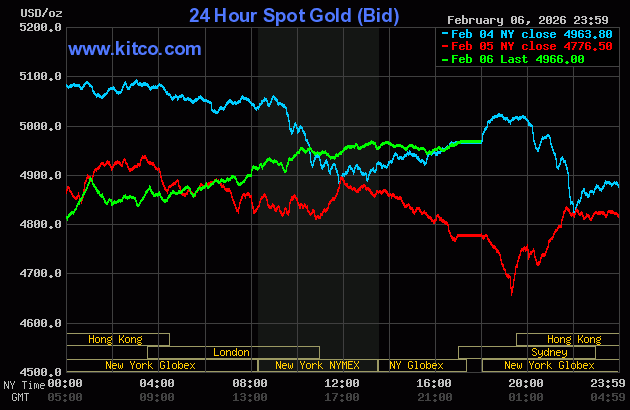
The 24-hour spot gold chart tracks intraday price movements across major global trading centers in USD per ounce. (KITCO)
Gold’s safe-haven halo is cracking. The metal is now down more than 22 percent from its late-January peak, pushing bullion deeper into bear-market territory even after Tuesday’s early slide moderated. Spot prices fell as much as 2 percent before stabilizing near $4,404.79 an ounce, a sharp reversal for an asset that was supposed to thrive on anxiety.
The mechanics are familiar, but the speed is not. A stronger U.S. dollar and elevated Treasury yields have tightened the vise, raising the opportunity cost of holding a non-yielding metal and making dollar-priced gold more expensive for non-U.S. buyers. CNBC noted the 10-year Treasury yield was around 4.384 percent and the dollar index was up 0.5 percent on the day, as investors marked down expectations for aggressive Federal Reserve rate cuts amid persistent inflation.
There is also a positioning story hiding in the price chart. Standard Chartered’s Rajat Bhattacharya told CNBC that gold often pops on initial safe-haven demand, then fades as investors raise cash for margin calls or take profits. That fits with last week’s damage, when gold lost almost 10 percent in its worst weekly showing since 2011, even as the Iran conflict kept geopolitical risk elevated.
The argument now is less about whether gold is “broken” and more about time horizon. eToro’s Zavier Wong framed the January blow-off as a trade driven by fiscal deficits, geopolitical fragmentation, and central-bank diversification, which can coexist with a brutal drawdown when rates and the dollar turn. Bulls are already trying to re-anchor expectations, with some pointing to a longer-term path that could still support aggressive targets such as $10,000, but near-term price action is making one message clear: gold is trading like a crowded position being unwound, not an all-weather hedge.