Source: PBS
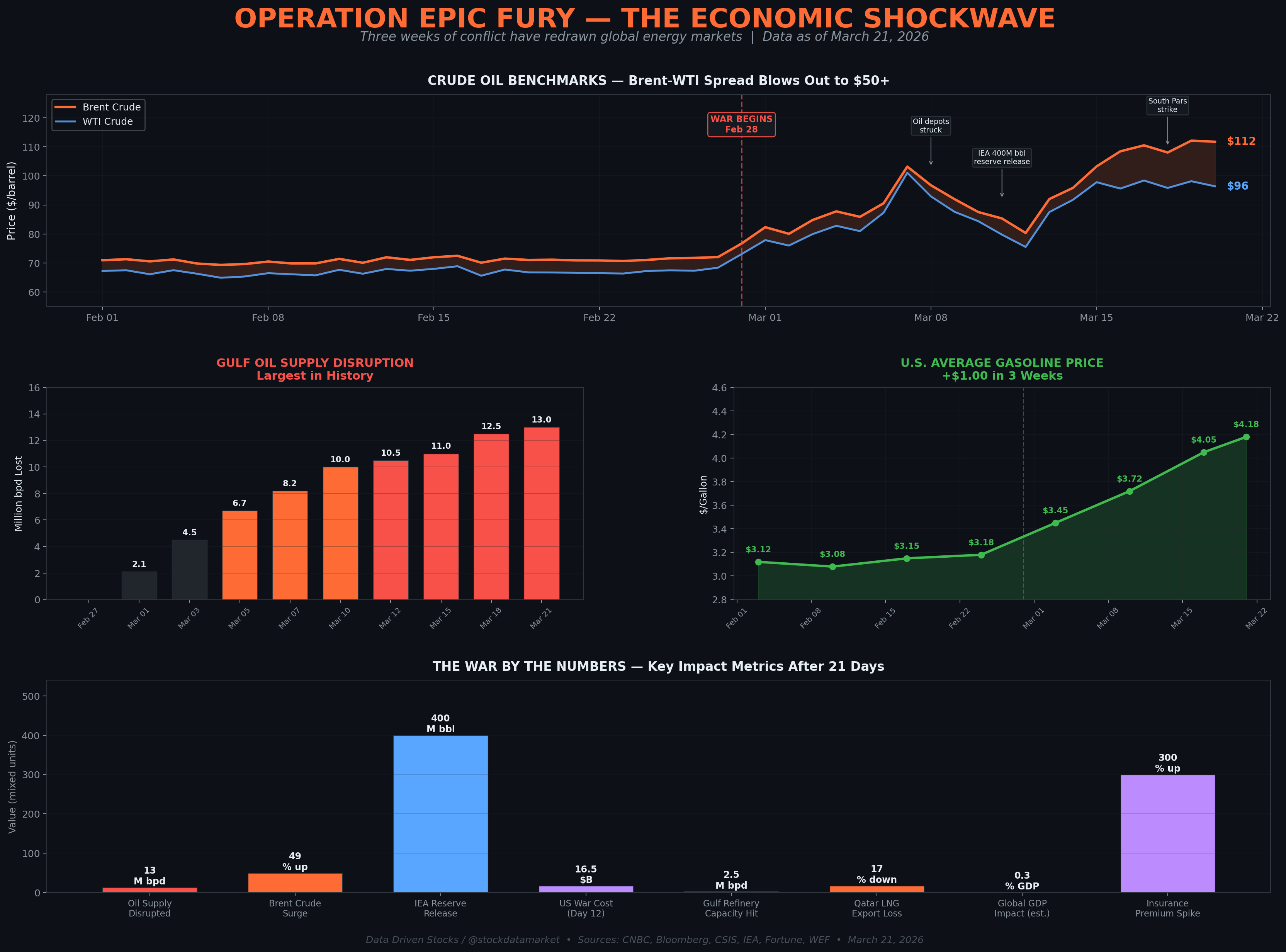
Markets ended the week looking unusually disjointed. As the Iran war stretches into a third week, U.S. stocks and bonds fell while Brent crude settled at $112.19 a barrel, yet gold posted its worst week in 14 years instead of acting like a classic safe haven. That mix has left investors trying to decide whether markets are pricing a short conflict, a longer inflation shock, or a bit of both.
The clearest message is still coming from energy and rates. Higher oil prices are raising fears that inflation could reaccelerate, and the 10-year Treasury yield climbed to 4.39 percent, signaling concern that interest rates may stay elevated for longer. MarketWatch noted that investors appear to be weighing the risk that oil-induced inflation could force tighter policy, even as equities have not fully priced in a deeper economic hit.
- The S&P 500 fell 1.51 percent Friday, while the Nasdaq dropped 2.01 percent and briefly flirted with correction territory, which on Wall Street means a decline of 10 percent or more from a recent peak.
- The VIX hovered around 28, well above its long-run median, a sign that investors are paying up for protection against more volatility.
- Bank of America’s fund manager survey showed cash levels rising to 4.3 percent from 3.4 percent, suggesting professional investors are getting more defensive.
Crypto has added another twist. Bitcoin had been climbing earlier in March, but sentiment turned sharply after President Trump issued a 48-hour ultimatum tied to the Strait of Hormuz, sending bitcoin below $69,200 and triggering $299 million in liquidations across crypto markets. At the same time, bitcoin miners were estimated to be losing about $19,000 per coin produced, a reminder that war-driven energy costs are now feeding through to digital assets as well as traditional markets.