Source: Data's Substack
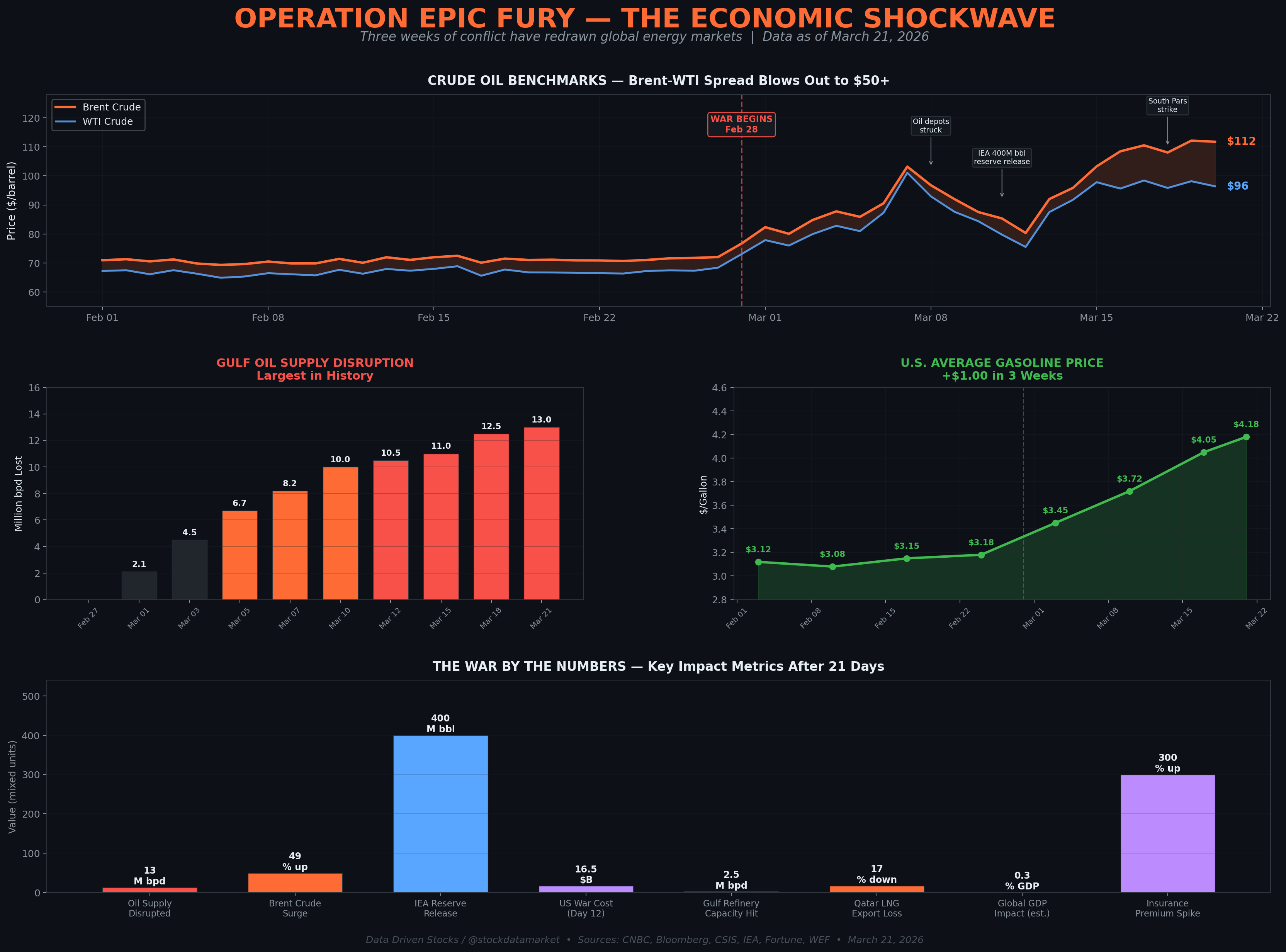
Markets are still trading like the Iran war is the macro story, not a headline risk. US stocks and bonds fell Friday as oil jumped, with Brent settling at $112.19 and the 10-year Treasury yield rising to 4.39 percent, a level that tends to tighten financial conditions for everything from mortgages to corporate borrowing. Even traditional “safe havens” did not behave traditionally, with gold down more than 10 percent for the week and the VIX, Wall Street’s volatility gauge, surging.
Strategists are increasingly framing this as a classic “fog of war” tape: lots of scenarios, low visibility, and rapid repricing when news breaks. One practical checklist making the rounds is to evaluate portfolio risk and raise cash, then avoid getting lulled by relief rallies that are not backed by tangible improvements such as shipping restarting through the Strait of Hormuz. The same piece flags the VIX sitting around 28, a level that often signals elevated uncertainty rather than full-blown panic.
Big banks are also adjusting their goalposts. JPMorgan cut its 2026 year-end S&P 500 target to 7,200 from 7,500, and outlined a near-term downside scenario as low as 6,000 if today’s headwinds worsen. The bank’s core worry is the earnings drag from energy, arguing that if oil stays near $110, it could shave 2 percent to 5 percent off S&P 500 earnings.
Crypto is reacting to the same geopolitical impulses, just with more leverage in the system. Bitcoin slid below $69,200 after President Trump’s 48-hour ultimatum tied to reopening the Strait of Hormuz, with CoinDesk reporting $299 million of liquidations over 24 hours. Under the hood, mining economics are getting squeezed too: CoinDesk cited an estimated average production cost of about $88,000 per bitcoin as of mid-March, implying many miners are operating at a loss at current prices.
Finally, a fast-growing corner of “markets” is colliding with regulation: prediction markets, where users trade event contracts that resemble sports betting. CNN reports the Trump family’s growing exposure, including Trump Media’s plans for a crypto-based platform called Truth Predict, as states and casinos push back on what they view as unlicensed gambling. In Nevada, a judge temporarily blocked Kalshi from offering event contracts in the state, issuing a restraining order sought by the Gaming Control Board, setting up another test of whether states or the federal Commodity Futures Trading Commission will ultimately set the rules.