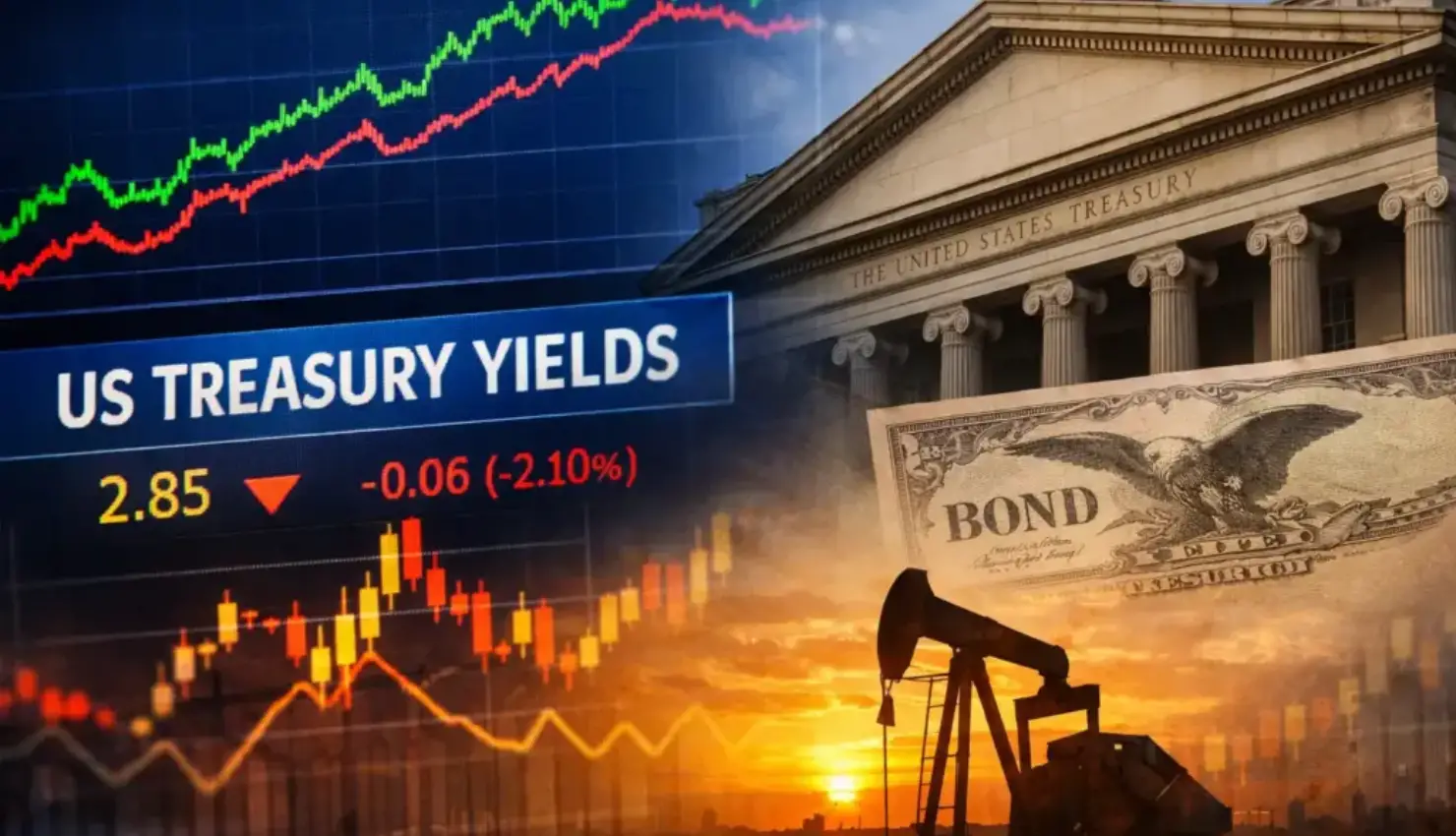
Wall Street is not just repricing the Iran war. It is starting to price the bill. After weeks of equities sliding and oil ripping higher, the real jolt came in the Treasury market, where weak demand at two-, five-, and seven-year auctions pushed yields above expectations. That shift matters because it turns a geopolitical shock into a financing problem, with rates rising exactly as Washington has more to fund and refinance.
Oil remains the transmission mechanism. The BBC notes crude was around $72 a barrel before the strikes, peaked near $118 on March 19, and was still hovering a little below $112 by Friday, with traders increasingly discounting President Donald Trump’s soothing signals. Higher energy prices raise inflation expectations, which pins the Federal Reserve in place and drags the entire yield curve upward, a dynamic Fortune describes as pressure concentrated at the short end as rate cuts get shelved.
- Stocks are feeling it in real time: the Washington Post reports financial markets hit a new 2026 low as oil rose again.
- Main Street is feeling it too: Marketplace cites Moody’s Analytics Chief Economist Mark Zandi saying gas jumped from under $3 to about $4 a gallon, and puts the 30-year fixed mortgage at 6.5 percent, up about half a point.
- Globally, the shock is widening: CNBC reports foreign investors are poised to pull a record $12 billion from Indian equities in March as higher oil squeezes growth and the rupee.
The next constraint is math, not messaging. Fortune flags that the federal government must refinance $10 trillion of debt over the next 12 months as deficits remain large, and it notes reports the Pentagon is seeking $200 billion from Congress for the war. If auctions keep clearing at higher yields, the pressure compounds quickly, feeding through to mortgages, corporate borrowing, and risk assets. Marketplace’s Zandi put it plainly: if disruption drags on, recession is “a real risk.”
