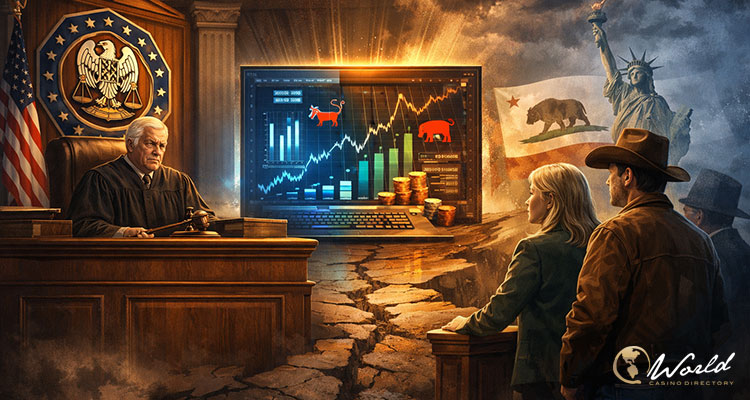
Washington just picked a side in the “is it finance or is it gambling?” brawl. The Trump administration, acting through the Commodity Futures Trading Commission, filed lawsuits against three states to block local gambling regulators from policing prediction markets, a sharp escalation that could decide whether platforms like Kalshi and Polymarket scale as regulated derivatives venues or get fenced in like sportsbooks.
The legal theory is simple and high-stakes: prediction contracts are “swaps,” meaning federal commodities law pre-empts state gaming rules. The CFTC is asking courts to declare that Illinois has no authority over these markets, and it brought parallel suits against Connecticut and Arizona. States and incumbent sportsbooks have argued the opposite, that these are unlicensed bets that dodge state taxes and consumer protections. If the federal government wins cleanly, prediction markets gain a single national rulebook. If states prevail, the business model fractures into a map of yes, no, and “lawyer up.”
The timing is not subtle. Prediction markets have moved from niche to mainstream, with users betting billions of dollars a week, and the product has expanded from sports into politics and geopolitics, raising the kind of manipulation and information-advantage concerns regulators love to cite. NPR has previously reported on insider-trading questions that crop up when markets are tied to government actions or sensitive events. The Financial Times has captured the other side of the frenzy with a warning label, calling it a hunt for the new “dumb money”, a reminder that rapid growth and retail attention tend to invite both innovation and blowups.
- For prediction-market operators, a federal win could speed partnerships and product expansion by reducing state-by-state legal risk, reinforcing their argument that they are exchanges, not casinos, as NPR described in its report on the lawsuits.
- For states and sportsbooks, losing would weaken the ability to tax and police a competitor they say is skirting gaming rules, one reason the suits target jurisdictions where regulators have pushed back most aggressively, including Arizona, which previously filed criminal charges against Kalshi.
- For traders, the near-term risk is whiplash: more liquidity and broader markets if courts side with the CFTC, or sudden product limits and state enforcement if courts define these contracts as gambling.

