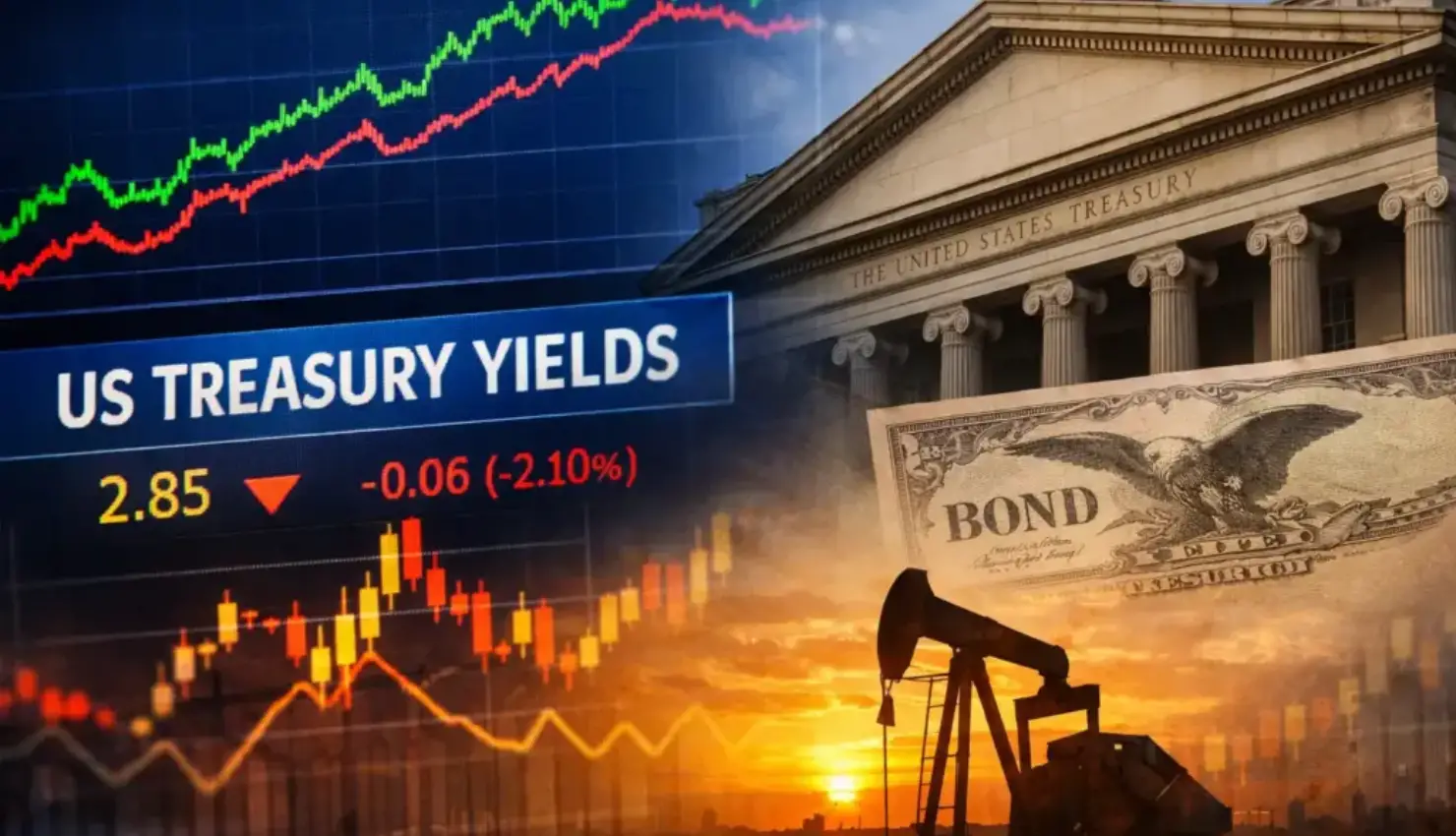
Wall Street is trying to price a war that can reverse on a single post, and the bond market is starting to demand hazard pay anyway. After a week of shaky Treasury auctions, investors are suddenly staring at a twin risk: higher inflation from oil and higher borrowing costs from a government that has to refinance a mountain of debt. Fortune reported that auctions for two-, five- and seven-year notes drew weak demand, pushing yields above expectations even as the Iran conflict drags into a fifth week.
The mechanics are ugly and familiar. Higher crude prices lift inflation expectations, which keeps the Federal Reserve boxed in and makes short-term Treasuries less forgiving when buyers hesitate. Fortune framed the pressure point starkly: the U.S. must roll over about $10 trillion of debt in the next 12 months, and economists cited in the same piece warned that war-related spending and a rising “risk premium” could compound the strain across funding markets.
Equity investors are not waiting around to find out where the ceiling is. The Washington Post said markets hit a new low for 2026 as oil climbed again, and consumer sentiment fell to its lowest level since December, a reminder that the war’s most immediate transmission mechanism is still the gas pump. That leaves companies and households absorbing tighter financial conditions from two directions at once: pricier energy in the present and pricier capital in the pipeline.
Then there is the trust problem, which is harder to chart on a yield curve but shows up fast in volatility. Rolling Stone reported unusual oil-futures trading shortly before President Donald Trump posted a surprise de-escalatory message that helped spark a rally, fueling calls from lawmakers for investigations and putting the Commodity Futures Trading Commission’s enforcement posture under a spotlight. If traders start to believe geopolitical risk is also information-asymmetry risk, that can translate into wider spreads, thinner liquidity, and more of the stop-start trading that makes both stocks and bonds feel jumpier than the headlines alone would justify.
