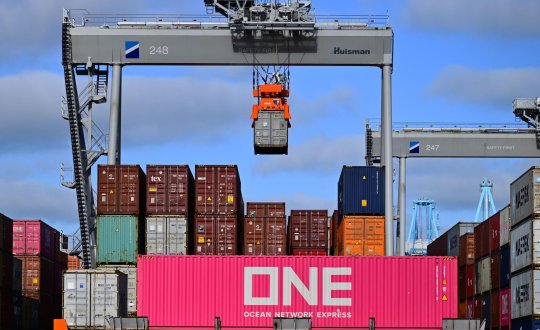
The Trump administration is putting new tariffs of 10% or 12.5% on imports from 60 trading partners starting Friday, with U.S. Trade Representative Jamieson Greer taking the final action at Trump's direction. The tariffs land under Section 301 of the Trade Act of 1974, and a USTR fact sheet says they cover 99.4% of U.S. imports.
The stated reason is forced labor. USTR opened investigations in March into whether trading partners had failed to impose and effectively enforce a ban on goods made with forced labor, and in June it determined those practices unreasonably burden U.S. commerce. Greer said decades of moral suasion have not eradicated forced labor from global supply chains.
The two rates split countries by conduct, per the fact sheet:
- Partners that have committed to adopt and enforce forced-labor import bans get the 10% rate.
- Partners that have not adopted such a ban face 12.5%.
A senior administration official told Axios that India adopted measures prohibiting trade in forced-labor goods after USTR proposed the tariffs in June, qualifying it for the lower rate.
The timing is deliberate. The new tariffs take effect at 12:01 a.m. ET Friday, the same moment a temporary Section 122 tariff of 10% expires. Axios reports the administration turned to Section 122, a never-before-used provision, after the Supreme Court ruled earlier this year that the International Emergency Economic Powers Act does not authorize the president to impose import duties. Section 122 allowed a blanket tariff for no more than 150 days and could not be renewed without Congress.
Section 301 is slower, requiring a formal investigation, public comment, and an official finding, which the administration is presenting as more durable in court.
Supply Chain Dive reports that China, the European Union, and Mexico are among those affected, with the charge calculated net of the Most-Favored Nation duty for countries like the EU, Japan, and South Korea. Oil and gas, certain fertilizers, some food products, and goods already under Section 232 levies are exempt.