
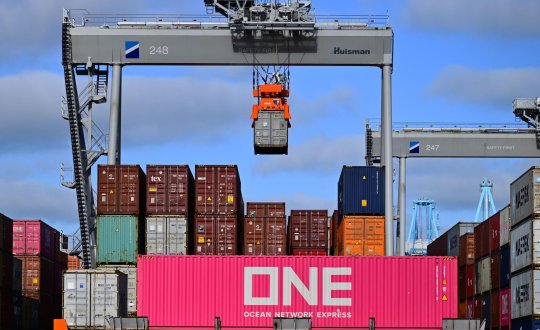
A new US tariff regime took effect at 12:01 a.m. ET Friday, covering 60 trading partners and 99.4% of American imports, according to the Office of the U.S. Trade Representative. The duties run 10% for countries the administration says have adopted or committed to banning goods made with forced labor, and 12.5% for those it says have not.
The Section 301 action replaces a temporary 10% global tariff that expired at the same moment. Trump imposed that stopgap under Section 122 of the Trade Act of 1974 after the Supreme Court struck down his emergency-powers "liberation day" duties on Feb. 20, and it carried a 150-day timer with no way to renew it without Congress. USTR launched the forced-labor investigation in March and concluded in June that the practices unfairly burden U.S. commerce.
The 10% tier includes Canada, Mexico, India, and the United Kingdom, according to ABC News. Taiwan and the European Union, the largest single U.S. trading partner, land in the 12.5% tier, along with China, Brazil, Japan, and Australia. A senior administration official said India adopted forced-labor measures after USTR proposed the tariffs in June, qualifying it for the lower rate.
Several partners rejected the forced-labor rationale.
- Australian Trade Minister Don Farrell called the tariffs "unjustified" and "inconsistent with our free trade agreement," saying Australia's anti-forced-labor measures are "among the strongest in the world."
- Brazil's government called them "arbitrary," and President Luiz Inácio Lula da Silva said Brazil would seek other markets if it could not sell into the U.S.
- Canada's Dominic LeBlanc said the move "is not unexpected" and that Ottawa would "continue engaging constructively."
No major partner has announced countermeasures over the forced-labor tariffs. The new duties exempt oil and gas, certain fertilizers, some foods, autos, some metals, and pharmaceuticals. USTR told CNBC it could not estimate how much revenue the tariffs will generate. A separate Section 301 probe into excess manufacturing capacity by 16 economies remains unfinished.

