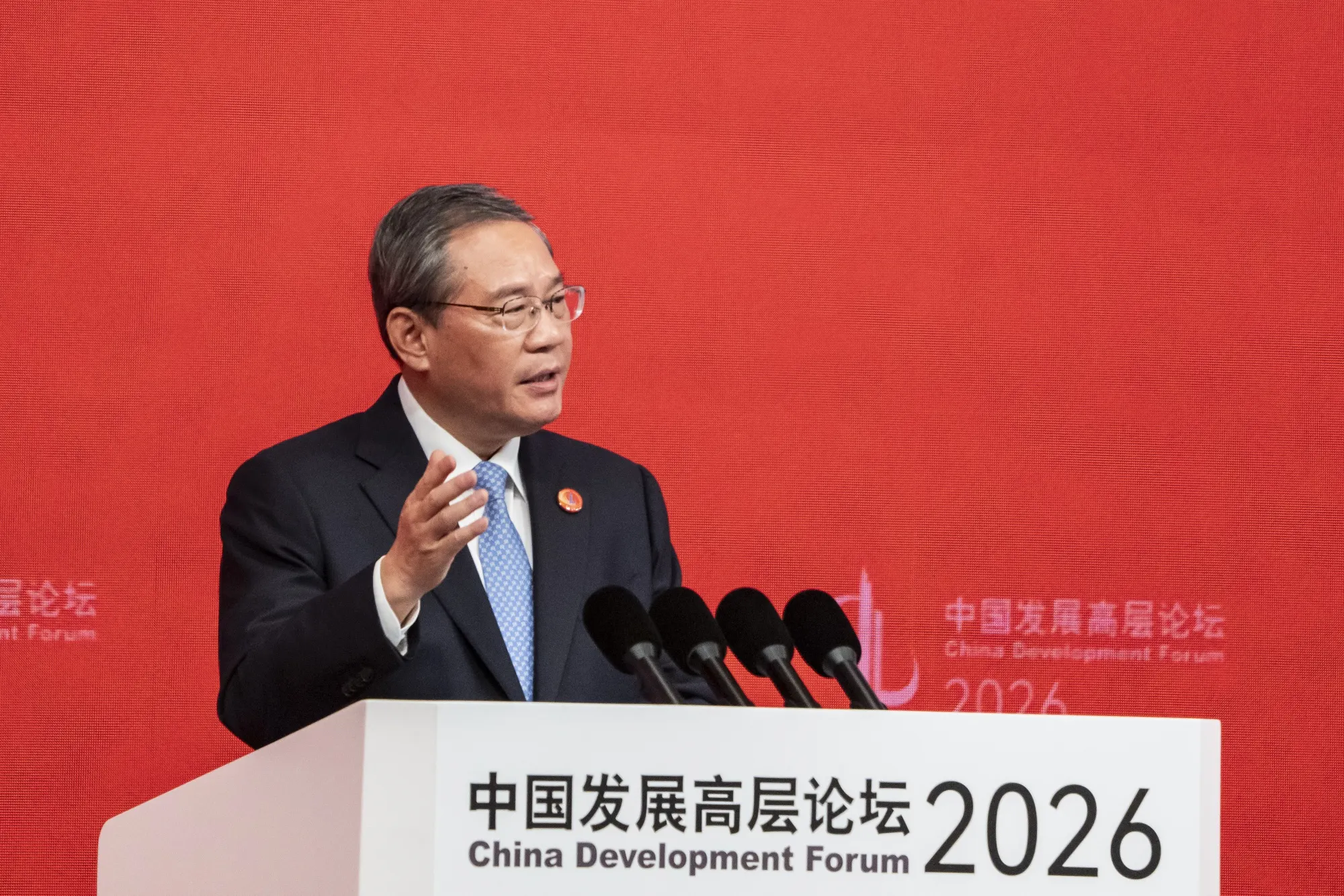
Premier Li Qiang speaks at the China Development Forum, where he pledged balanced trade to foreign executives.
Source: Bloomberg News
China’s leadership spent the weekend trying to turn a market-sized problem into a diplomatic talking point: Premier Li Qiang vowed to pursue “optimised and balanced trade” as Beijing faces a record $1.2 trillion trade surplus, even while exports keep surging this year. Li told foreign executives at the China Development Forum that Beijing will work with partners to ease imbalances — a pitch aimed at cooling tariff talk and reassuring multinationals that China remains an open market.
The policy language is accompanied by reassurances from the People’s Bank of China. Governor Pan Gongsheng framed the surplus as part of a wider financial picture, saying China’s current-account gains are redistributed through investment and financial flows rather than kept idle. That argument matters for markets: it is meant to undercut critics who see the surplus as evidence of unfair trade practices or deliberate currency weakness.
Promises of tougher market access for foreign firms and “national treatment” are already being used as selling points to lure back investors after inward flows fell. Reuters flagged Beijing’s pledge to treat foreign companies the same as domestic ones and to widen sectors eligible for incentives — gestures meant to reverse a drop in foreign direct investment. In practice, multinational executives at the forum publicly praised stability, but policy deliverables will be measured in months, not speeches.
- The scale of the surplus: $1.2 trillion in 2025 — the political headache driving Beijing’s outreach.
- Li’s pledge: more imports of “high-quality foreign goods” and cooperation on balanced trade.
- PBOC framing: surplus recycled via investment and the financial account, not a currency play.
The near-term consequence is a tactical one: Beijing is buying breathing room with words and limited incentives, which could dampen the momentum for new tariffs or stricter trade curbs from concerned capitals. The longer contest is structural — rebalancing toward services, boosting imports and restoring foreign direct investment — and success will depend on concrete measures that go beyond forum assurances. Investors and policy watchers should watch import trends, reported services deficits and follow-up rules on foreign-investment treatment for signs that the rhetoric is evolving into enforceable change.