
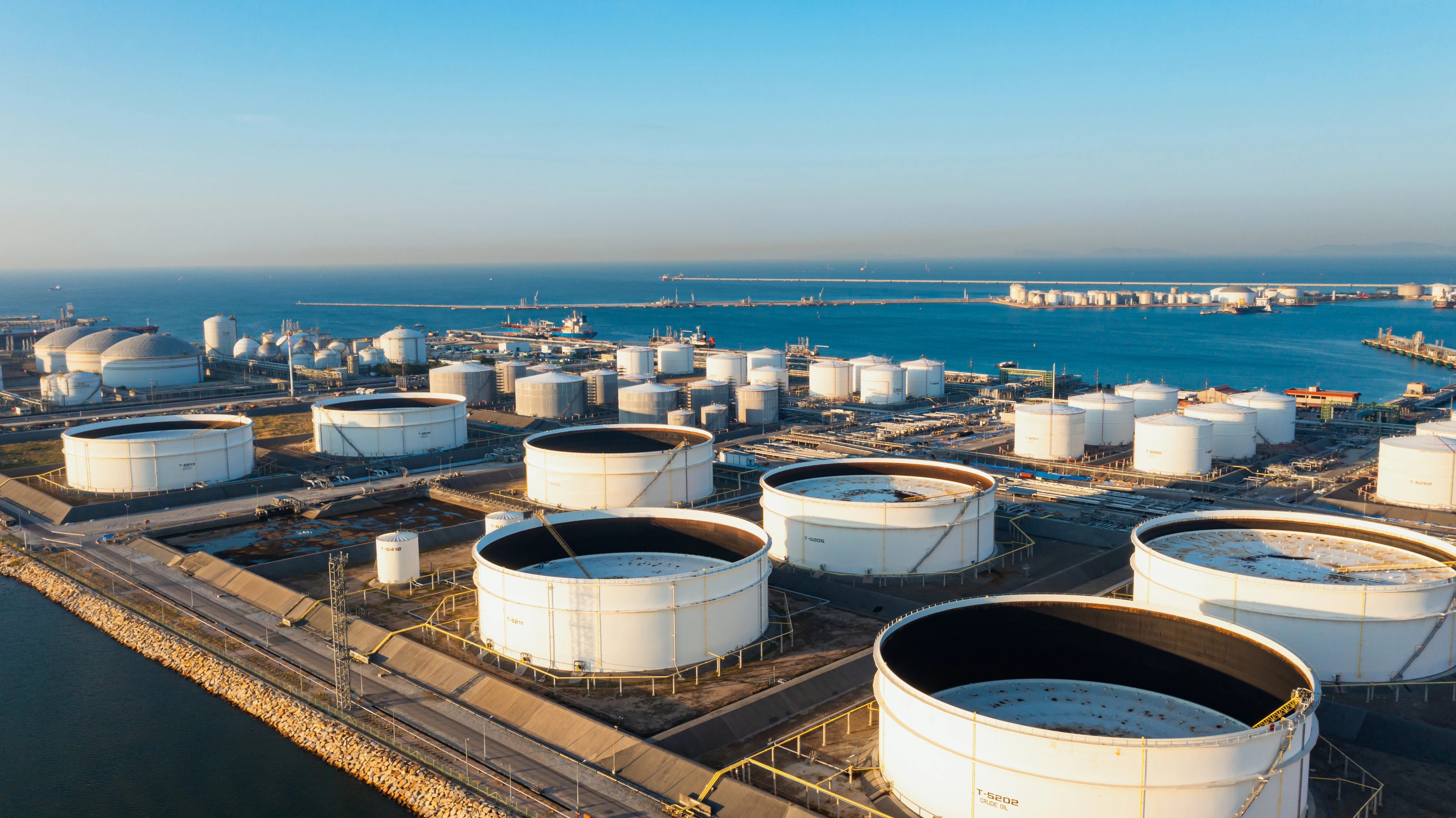
Oil markets are approaching two simultaneous supply emergencies as the U.S. and Israel’s war with Iran keeps the Strait of Hormuz closed. Global crude stockpiles are disappearing so quickly that analysts at JPMorgan expect OECD inventories to hit "operational minimums" between May 9 and May 30. If these "tank bottoms" are reached, traders warned that price increases will become exponential rather than linear.
While consuming nations run dry, Iran is facing the opposite crisis. A U.S. naval blockade has bottled up Iranian exports, forcing the country to store excess production. Tehran is currently recommissioning old tankers for floating storage and cutting output to avoid hitting "tank tops." Reaching maximum storage capacity would force drastic production cuts that risk permanent damage to Iranian oilfields.
Inventory levels falling
Efforts to bridge the supply gap are depleting the world’s remaining safety nets. Although Saudi Arabia and the UAE are using bypass routes to move crude, and the U.S. has ramped up exports, the strain is visible in the data:
- U.S. reserves of crude and oil products dropped by 52 million barrels over the last four weeks.
- WTI futures are hovering around $102 per barrel, while Brent crude has topped $108.
- Exxon Mobil CEO Darren Woods warned that the market has yet to see the full impact of the "unprecedented disruption."
Supply response. Despite prices remaining above $90 for a month, U.S. shale producers in the Permian Basin are not deploying more rigs. According to a Dallas Fed survey, executives cited political uncertainty and the need for higher 2027 futures prices as barriers to increasing output. Without a change in drilling activity, Energy Aspects predicts global buffers will be entirely exhausted by the end of June.
The critical window for OECD inventory levels begins May 9.

