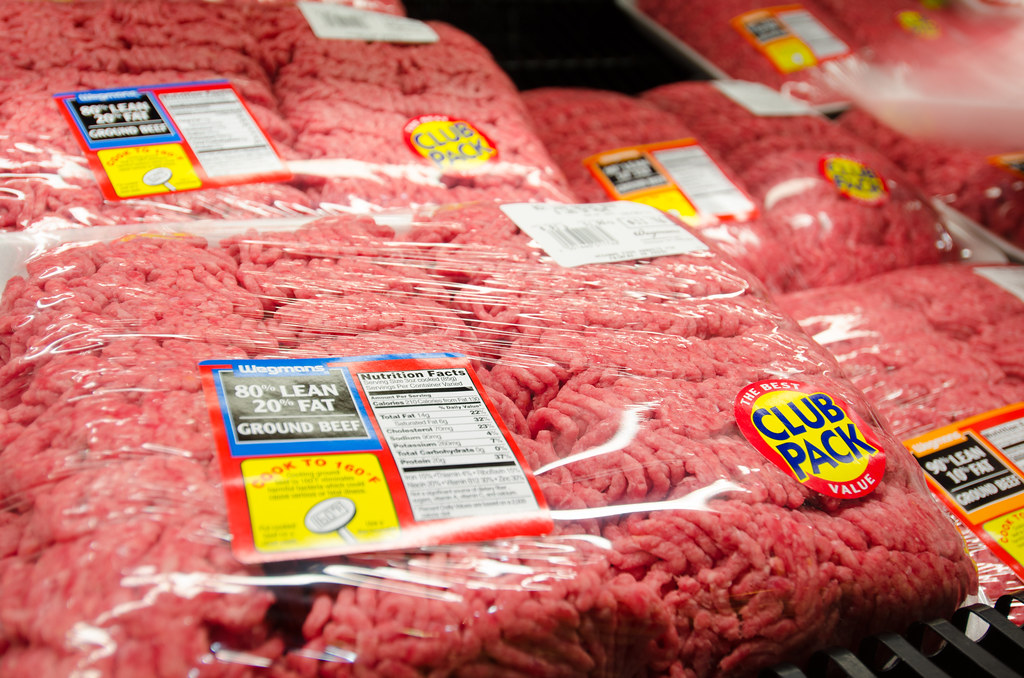
American shoppers are seeing beef prices turn a summer staple into a budget decision. Lean ground beef has reached an average price of $8.34 a pound, above the $7.25 federal minimum wage, while even the cheapest ground beef now averages more than $5.40 a pound. The comparison is partly symbolic, since relatively few workers earn the federal floor and many states set higher minimum wages, but it shows how far grocery dollars are stretching.
Smaller herds, higher bills
The supply problem starts on ranches. The U.S. beef cow herd is at its smallest since 1951 after drought pushed producers to sell animals earlier than planned. In Colorado grocery ads tracked by USDA, organic 90% lean ground beef averaged $11.99 a pound this week, conventional 90% lean averaged $7.42, and cheaper 70% lean beef at $4.99, up from $2.84 five years earlier.
The cattle pipeline cannot refill quickly. Brenda Boetel, an agricultural economics professor at the University of Wisconsin-River Falls, said that if a rancher keeps a young female cow today, it can take two to three years before her calf reaches the beef supply. That lag matters for households choosing between burgers, chicken and restaurant meals, and for meat processors that need plants running near capacity.
Trade deadline ahead
Imports are another constraint. North American cattle and beef markets are tightly linked through the U.S.-Mexico-Canada Agreement, with young cattle from Mexico and slaughter-ready cattle from Canada feeding U.S. packing plants. Almost all U.S. cattle imports come from those two countries, totaling about 2.1 million head in 2024, but live cattle imports plunged by more than 50% in 2025, and young cattle imports from Mexico fell over 80% in 2026 because of the screwworm outbreak.
The trade backdrop adds another unresolved piece. The U.S., Mexico and Canada face a July 1, 2026, decision on whether to extend USMCA for another 16 years or move into annual reviews until the pact’s 2036 expiration.