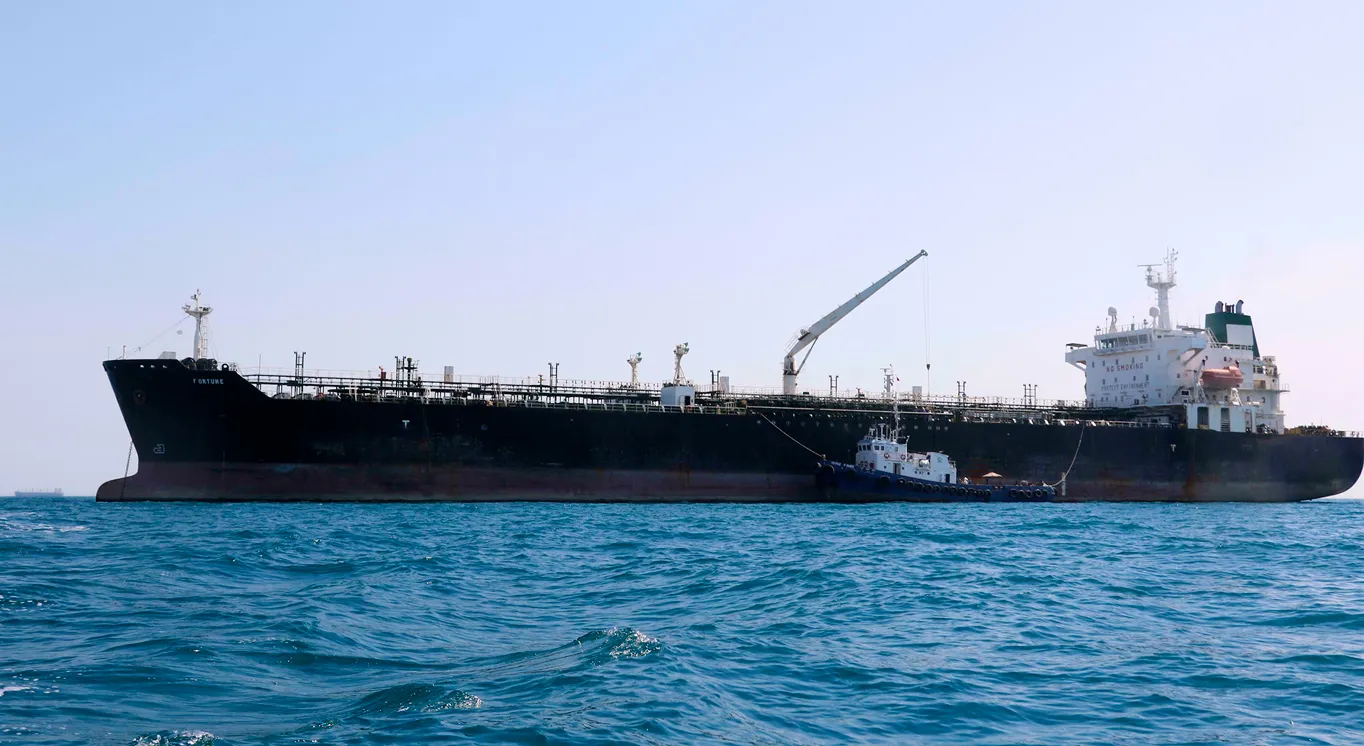
President Donald Trump unveiled Project Freedom on Sunday, a military-backed plan to escort stranded civilian ships out of the Strait of Hormuz starting Monday. The announcement immediately cooled an energy market that has been crippled by the waterway's effective closure during the ongoing war with Iran.
Project Freedom details
The U.S. Central Command confirmed that military support for the initiative will include 15,000 service members, guided-missile destroyers, and more than 100 aircraft. The operation specifically targets trapped merchant vessels flagged in countries not involved in the conflict, attempting to restore a flow of trade that has been halted by a U.S. naval blockade and regional hostilities.
Energy markets responded to the potential for easing supply constraints with a swift pullback:
- West Texas Intermediate futures fell 0.59% to $101.34 per barrel.
- Brent crude futures declined as much as 2.4% before paring losses to trade around $107.88.
- U.S. stock futures remained largely flat, with the S&P 500 and Nasdaq 100 each adding roughly 0.1% as investors weighed the relief in oil against persistent geopolitical risks.
A month of extremes
The intervention follows a volatile April where the S&P 500 gained 10% and the Nasdaq surged 15%, despite Brent crude hitting an Iran war-high of $126. While corporate earnings helped stocks ignore the conflict, the bond market felt the squeeze as the 10-year Treasury yield hit 4.4%, a peak not seen since March.
The outlook. Berkshire Hathaway, now led by Greg Abel, signaled caution amidst this recovery by reporting $8 billion in net stock sales for the first quarter. Despite holding a record $397 billion in cash, the conglomerate remained a net seller for the 14th consecutive quarter, suggesting that even as oil prices dip, broader market valuations remain historically elevated.
Project Freedom begins Monday during Middle East time.