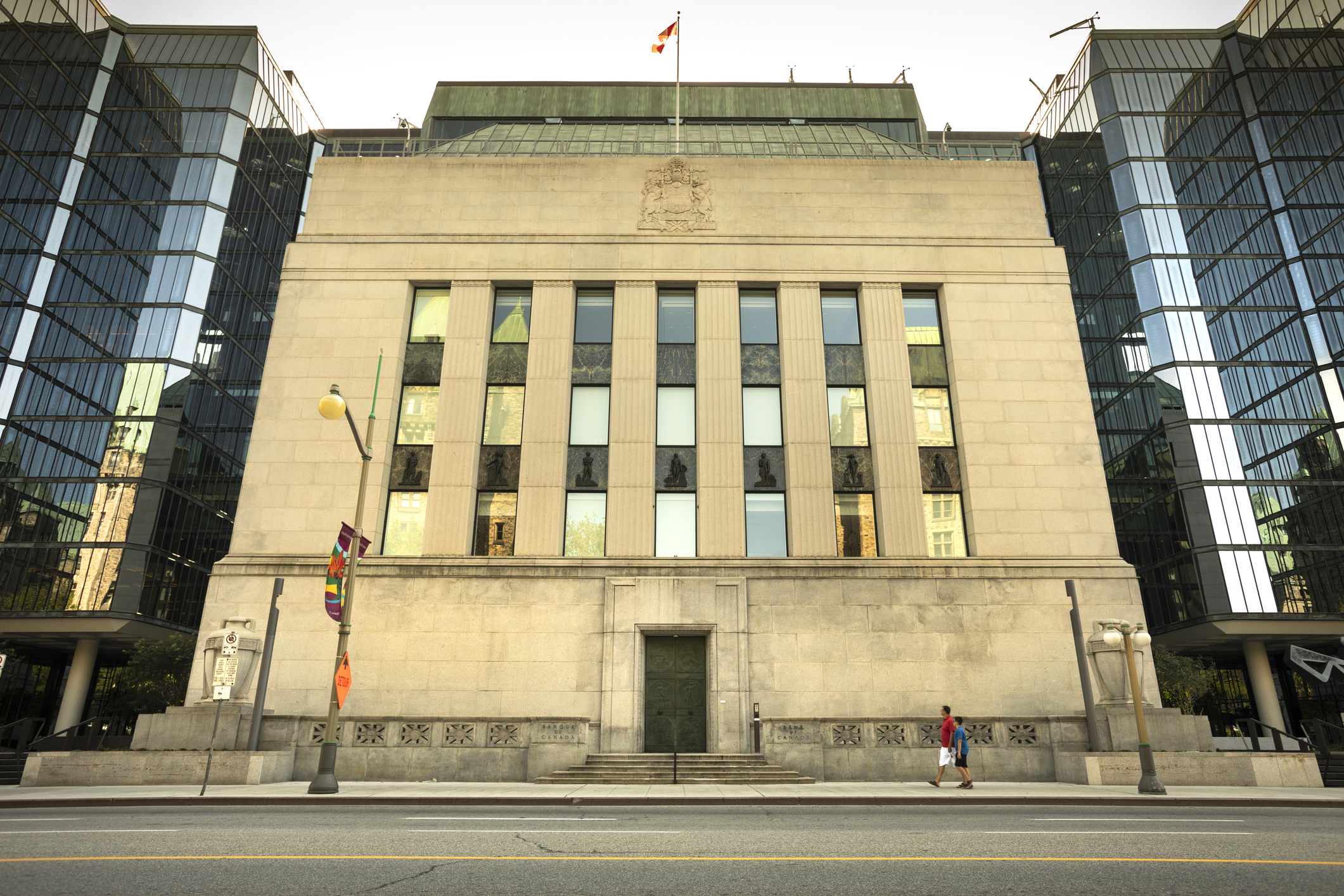
The Bank of Canada held its main interest rate at 2.25 percent Wednesday, choosing patience even as the Iran war pushes energy costs higher and inflation is expected to peak around 3 percent in April.
Governor Tiff Macklem and officials are trying to look through a near-term price shock without giving borrowers a fresh cut. The bank’s forecast assumes crude oil falls to $75 a barrel by mid-2027 and assumes no change in U.S. tariffs on Canadian goods, leaving policy tied to two unstable inputs: energy and trade.
- Brent crude was around US$109 a barrel Wednesday after Iran blockaded the Strait of Hormuz, a waterway tied to 20 percent of global oil supply.
- Canada’s inflation rate rose to 2.4 percent in March from 1.8 percent in February, led largely by fuel costs.
- Food bought from stores rose 4.4 percent in March, with fresh vegetables up 7.8 percent as suppliers added fuel surcharges to deliveries.
The hold also lands on a weaker domestic economy. In its quarterly monetary policy report, the central bank said housing will now subtract 0.1 percentage points from Canadian GDP growth this year, a downgrade from January, when it expected housing to add 0.2 points.
The pressure is concentrated in residential real estate, especially small condos in major cities. March home sales were 20 percent below the 10-year average, Toronto preconstruction sales are at their lowest level in more than three decades, and the Toronto-Hamilton region had a record 4,295 newly completed condo units sitting unsold in the first quarter.
Ottawa and Ontario are trying an HST rebate on newly built homes to clear inventory and restart construction, but the central bank said a “substantial inventory overhang” will restrain new building. If oil stays elevated and feeds broader prices, the bank has warned rates may have to rise, which would hit variable-rate mortgages and fixed-rate funding costs before the housing market has found its floor.