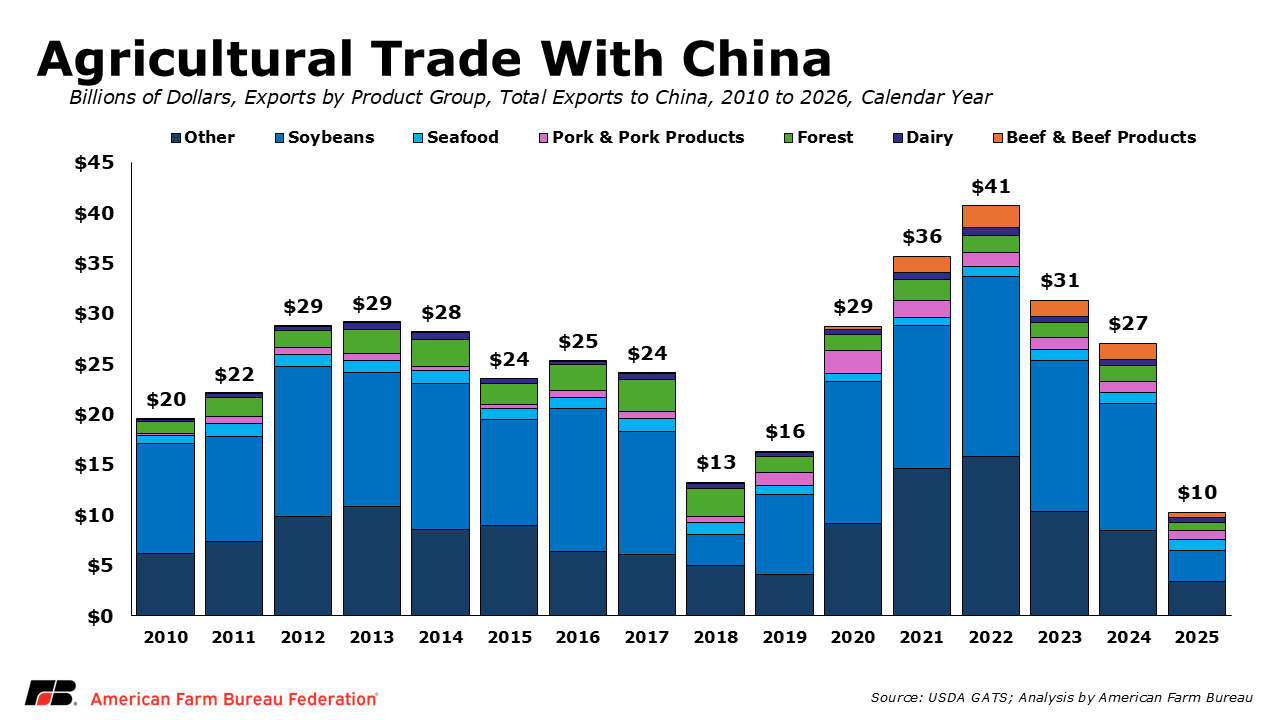
China has agreed to purchase at least $17 billion of American agricultural products annually through 2028, according to a White House fact sheet released after President Donald Trump’s summit in Beijing. The deal adds to existing commitments to buy 25 million metric tons of soybeans every year through 2028, a target set after a previous meeting in South Korea last fall.
Agricultural and Industrial Gains
The summit produced several concrete deliverables intended to widen market access for U.S. producers. Beyond the annual spending target, China renewed expired registrations for more than 400 U.S. beef facilities and agreed to resume poultry imports from states the USDA considers free of avian influenza.
- Aircraft and Tech. China agreed to an initial purchase of 200 Boeing aircraft, with the U.S. ensuring a steady supply of engines and parts.
- Critical Minerals. Beijing will address export restrictions on rare earth minerals including yttrium, scandium, neodymium, and indium.
- New Oversight. Both nations will establish boards of trade and investment to facilitate government-to-government discussions on commercial issues.
Mixed Messaging. Discrepancies remain between the two governments regarding trade barriers. China’s Ministry of Commerce stated that both countries agreed to mutually cut levies on certain products, while President Trump told reporters Friday that tariffs were not discussed during the two-day meeting.
U.S. farmers have faced low crop prices and high costs, recently exacerbated by a surge in fertilizer prices linked to conflicts in Iran. While the $17 billion commitment may bring trade values back toward post-Phase One levels, some analysts remain skeptical after China failed to meet a 2020 pledge to buy an extra $200 billion in U.S. goods.
President Xi Jinping is scheduled to visit the White House in September.