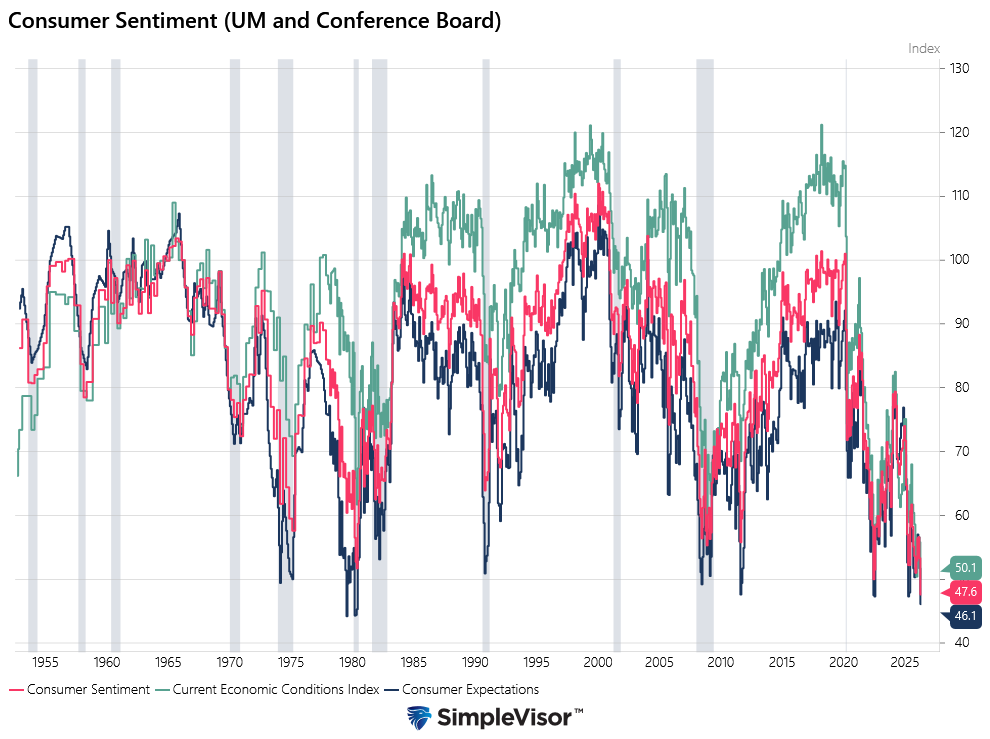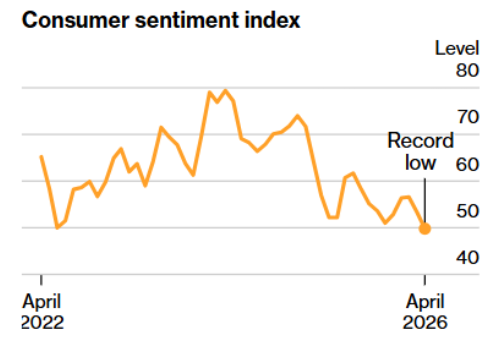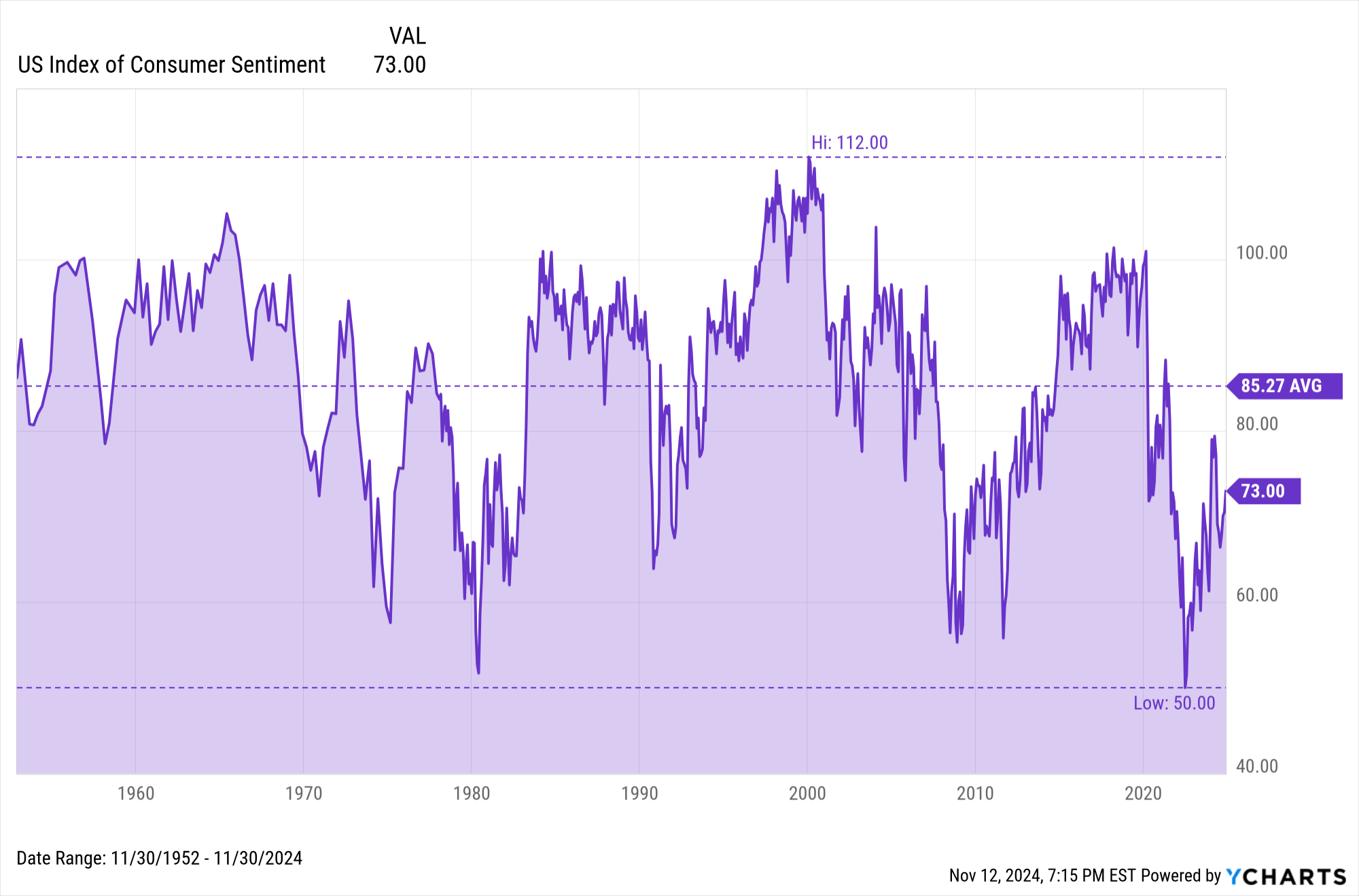
U.S. consumer sentiment sank to a record low in April, even after a ceasefire with Iran briefly eased the shock from the conflict. The University of Michigan’s final reading came in at 49.8, up from the earlier 47.6 estimate but still below March’s 53.3 and beneath the prior lows seen in the financial crisis and pandemic, according to Reuters and Bloomberg.
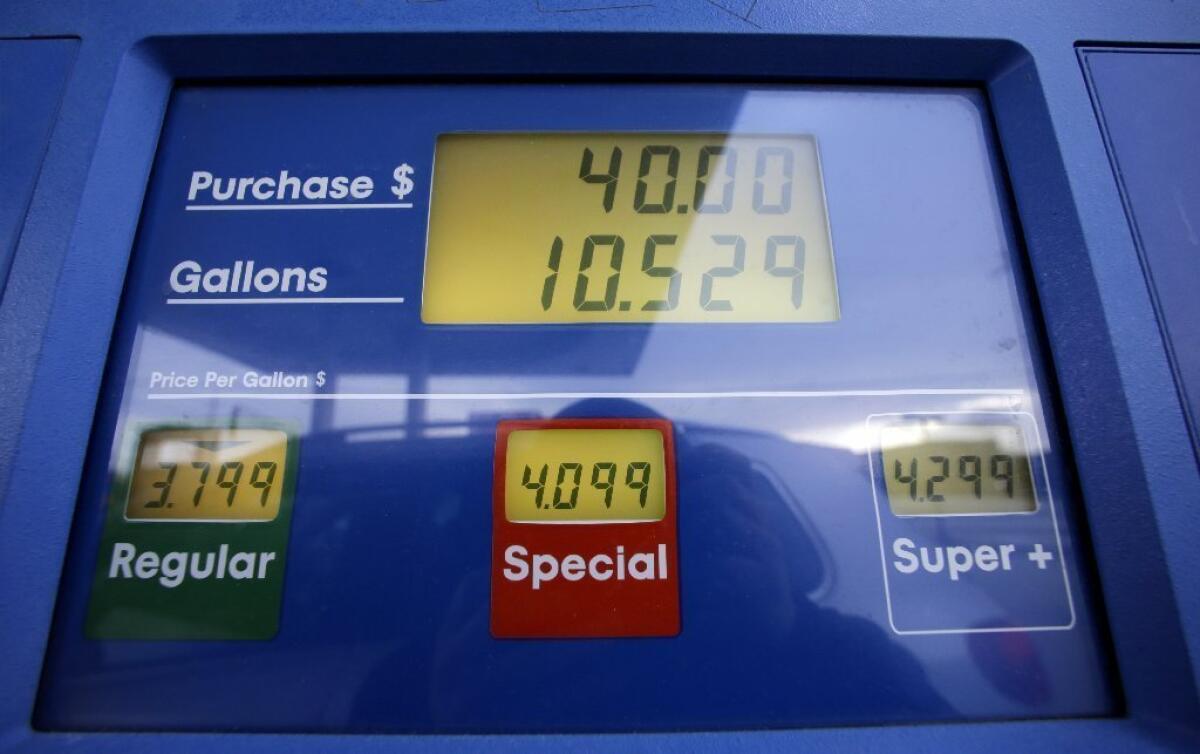
The decline was broad-based, hitting households across party lines, incomes and age groups, and it tracks a jump in inflation fears. Year-ahead inflation expectations rose to 4.7 percent from 3.8 percent, while five-year expectations climbed to 3.5 percent, as gasoline and diesel prices stayed elevated after the war disrupted shipping through the Strait of Hormuz.
That puts pressure on lower- and middle-income households first, since they spend a bigger share of income on fuel, and economists quoted by Reuters said higher transport costs could still filter into food, appliances and other goods. A Reuters/Ipsos poll also found a clear majority blaming President Donald Trump for surging gasoline prices, adding a political edge to the price shock.
For the Federal Reserve, the worry is that higher inflation expectations are now starting to harden just as S&P Global’s measure of prices charged by businesses hit a nearly four-year high. Unless energy prices fall further or the Iran ceasefire turns permanent, the sentiment data suggest consumers may stay cautious even if equity markets keep setting records.