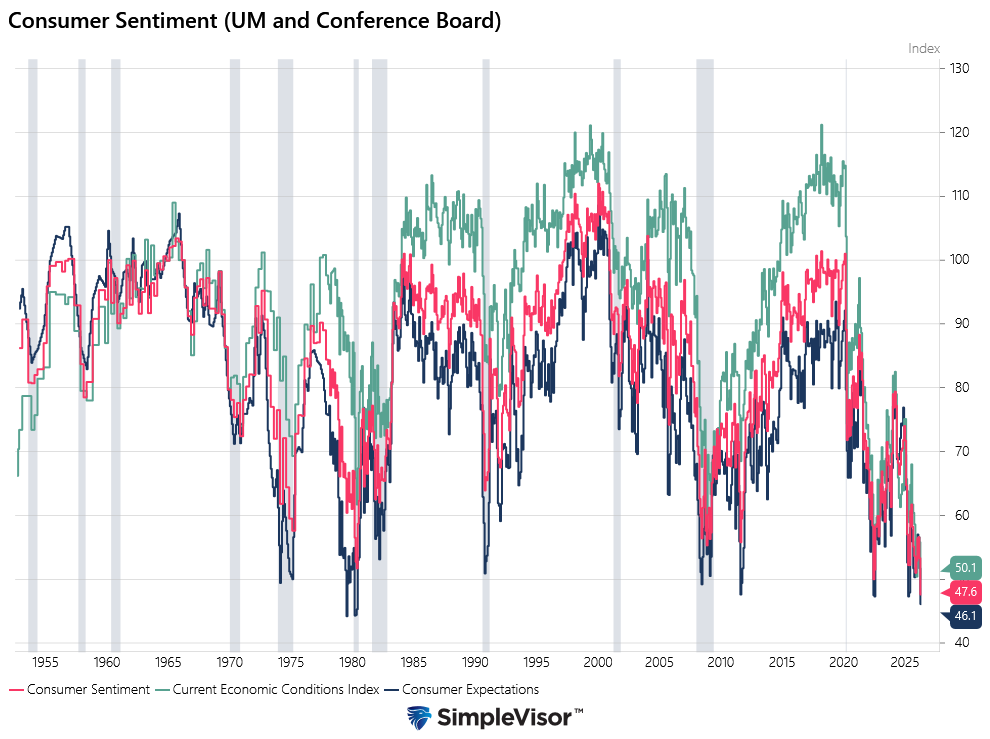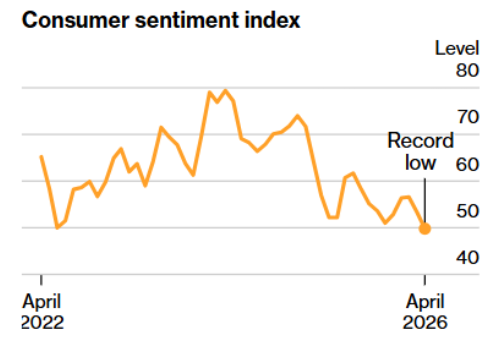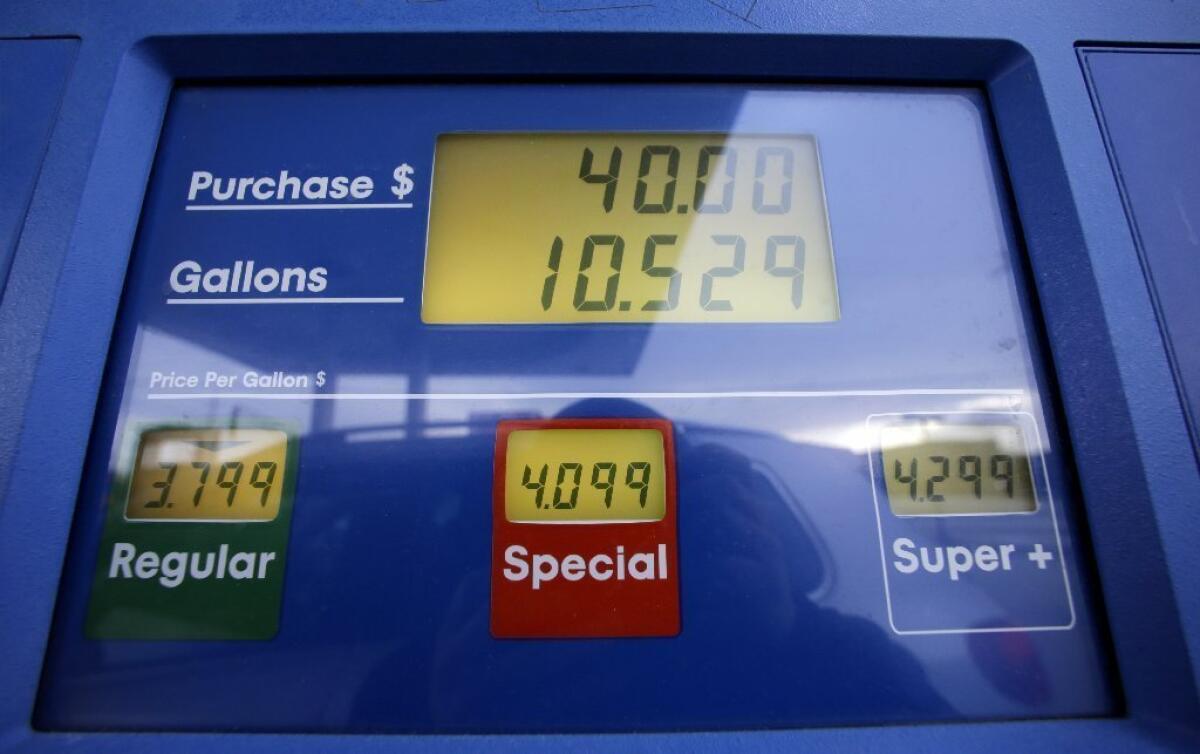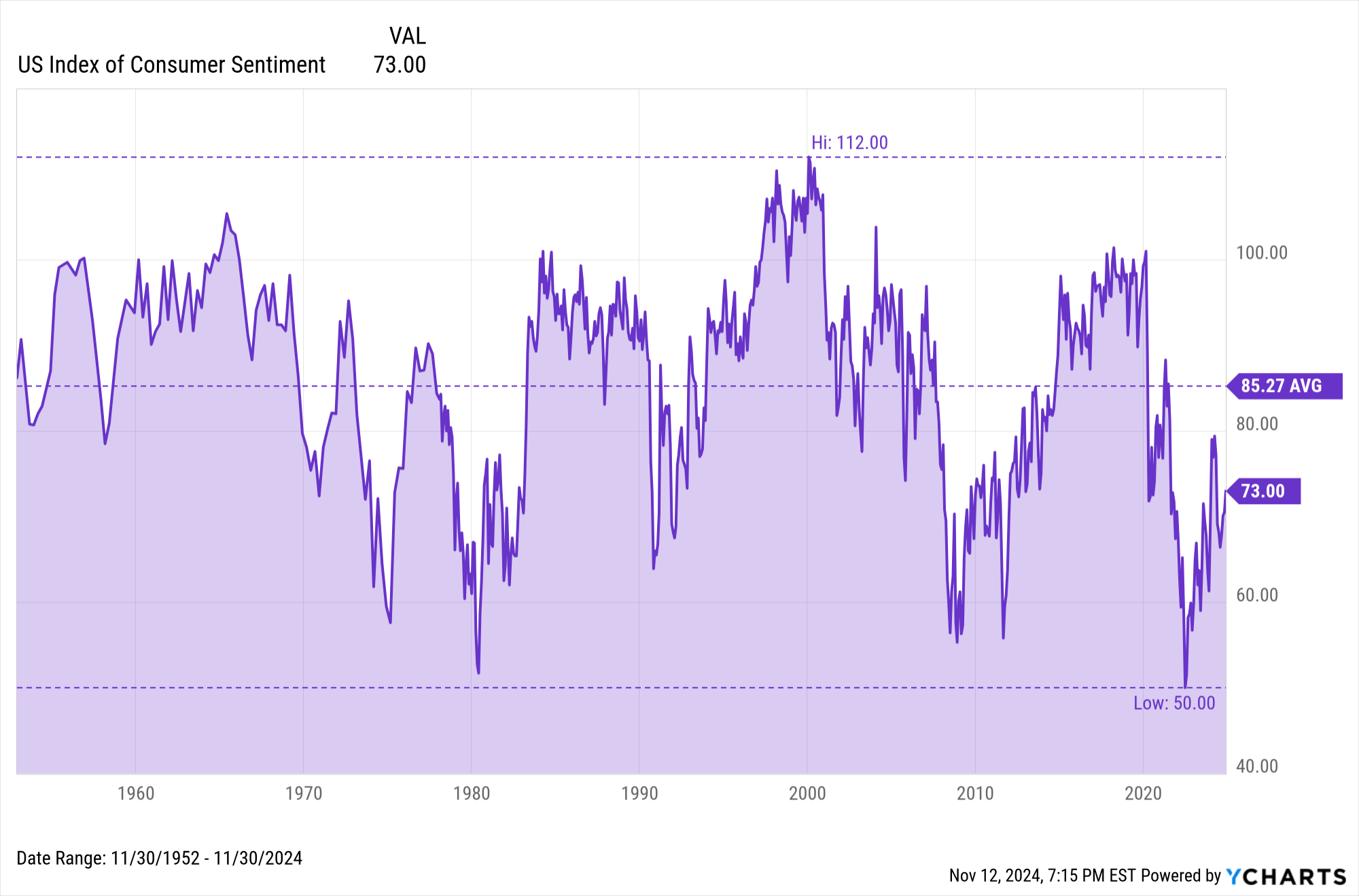
Consumer sentiment has fallen to a record low even as U.S. stocks sit near all-time highs, a split that underscores how little the mood of ordinary households is moving markets right now. The latest Michigan reading points to a public rattled by war in Iran, higher gasoline prices and tariffs pushing inflation back up after it had eased.
That disconnect is easier to explain in a country where equity ownership is heavily concentrated. The top 1 percent owns half of U.S. stocks and the top 10 percent owns 87 percent, so a sentiment collapse among the bottom 90 percent does not hit markets the same way it hits Main Street, while spending data show the top 10 percent is driving about 49.2 percent of consumer outlays.
For Germany, the damage is more direct: the Ifo business climate index dropped to 84.4 in April, its lowest since May 2020, and the economy ministry cut its 2026 growth forecast to 0.5 percent from 1 percent. Higher energy prices are also feeding through to inflation, with the ministry now seeing 2.7 percent this year and 2.8 percent next year, even after Berlin approved 1.6 billion euros in fuel tax relief.
That leaves the next test with the Strait of Hormuz, where every additional day without oil shipments increases the risk of recession, according to German economists. If the disruption lasts, the question shifts from whether fiscal stimulus can cushion the blow to whether it can arrive fast enough to stop the recovery from stalling again.