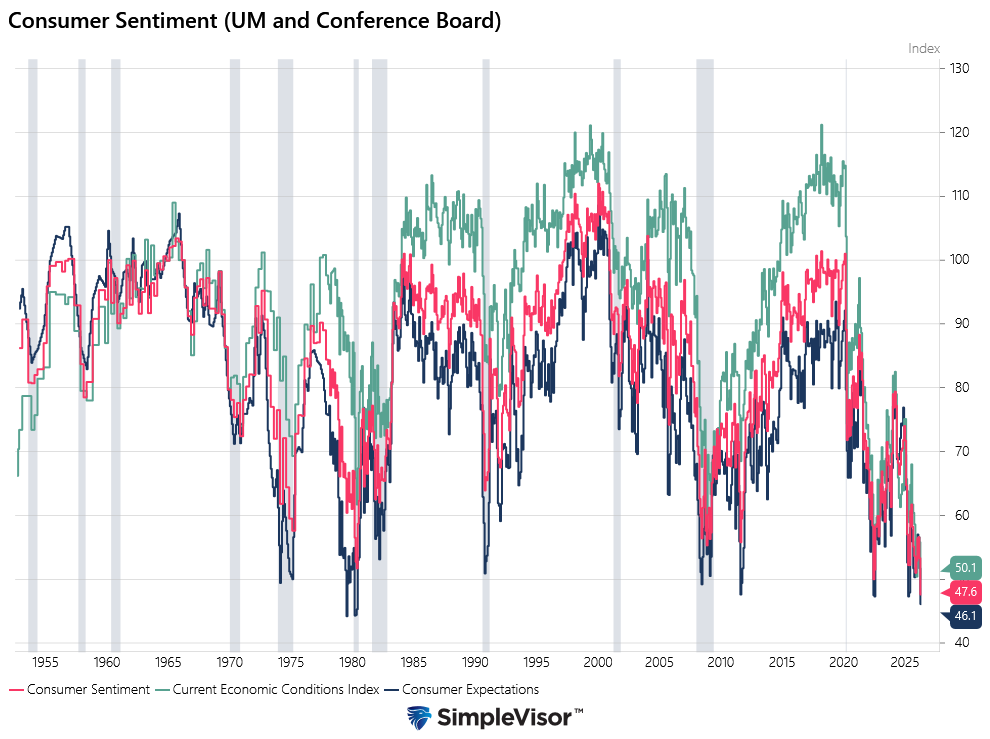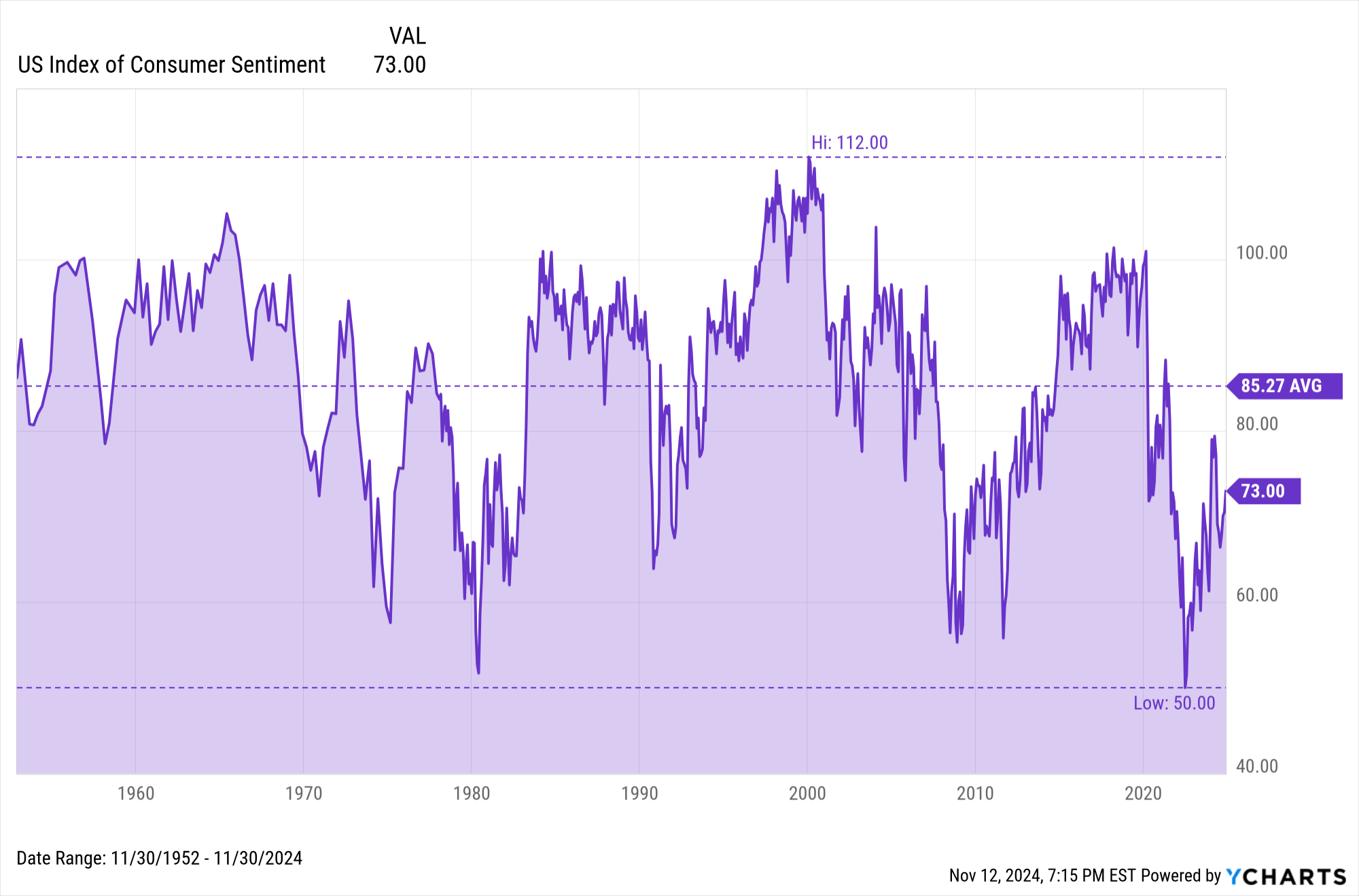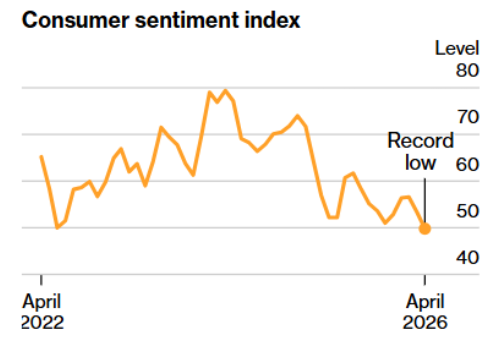
U.S. consumer sentiment has fallen to a record low of 49.8 in April, as households kept reacting to the inflation shock from the Iran war even after the ceasefire was extended. The University of Michigan reading was slightly better than the midmonth estimate, but it still undershot expectations and marked a sharp slide from 53.3 in March.
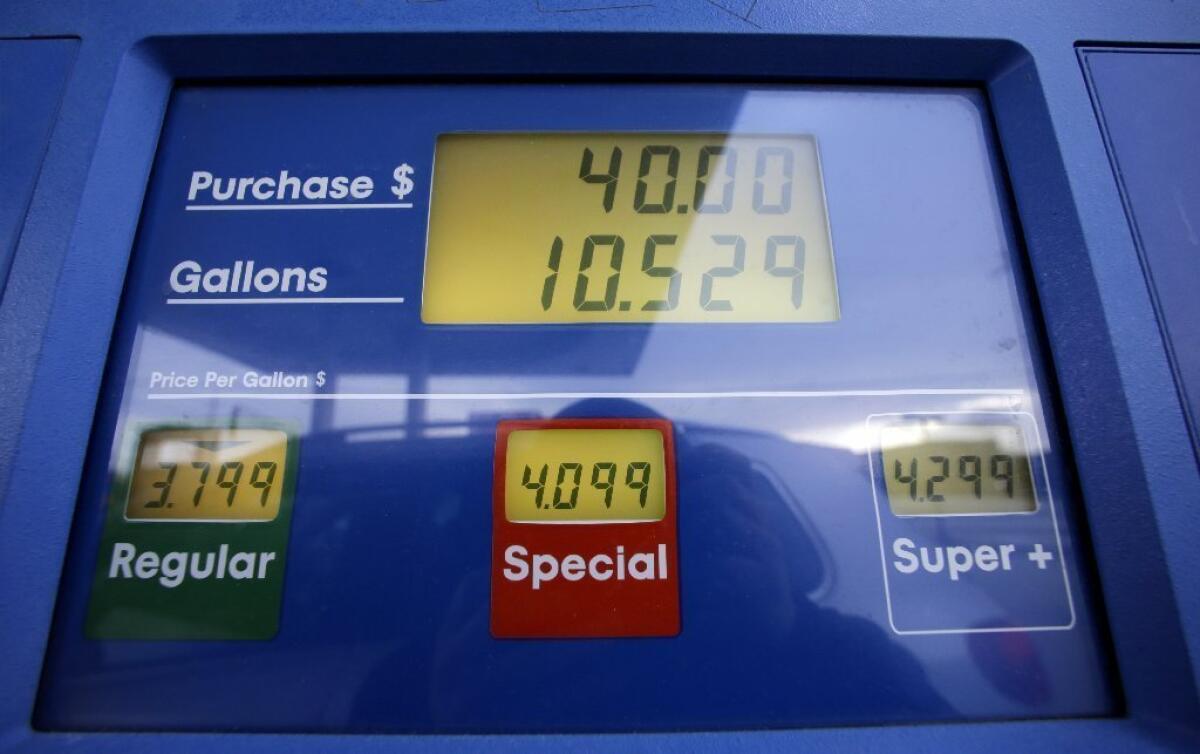
That drop has a very specific mechanism: disrupted shipping through the Strait of Hormuz has pushed up oil, gasoline and diesel, and consumers are already seeing the strain in everyday prices. The same Reuters report said year-ahead inflation expectations jumped to 4.7 percent from 3.8 percent, while five-year expectations rose to 3.5 percent, a level that suggests the fuel shock is bleeding into broader price fears.
That puts pressure on households first, especially lower- and middle-income shoppers whose budgets are more exposed to fuel costs, and on businesses that rely on trucking and imported inputs. It also leaves the Federal Reserve with less room to ease, after a separate survey showed prices charged by businesses rising at the fastest pace in nearly four years, reinforcing bets that rates will stay higher for longer.
In Russia, the opposite problem is showing up: the central bank cut its key rate to 14.5 percent for the eighth straight time, even as it flagged slowing demand, weak investment and “unfavourable weather conditions.” The bank still sees 2026 growth at just 0.5 percent to 1.5 percent, and its next policy meeting on June 19 will test whether officials keep easing or turn more cautious if inflation and war-related energy risks stay elevated.