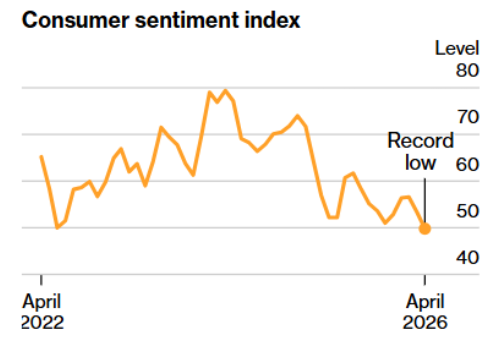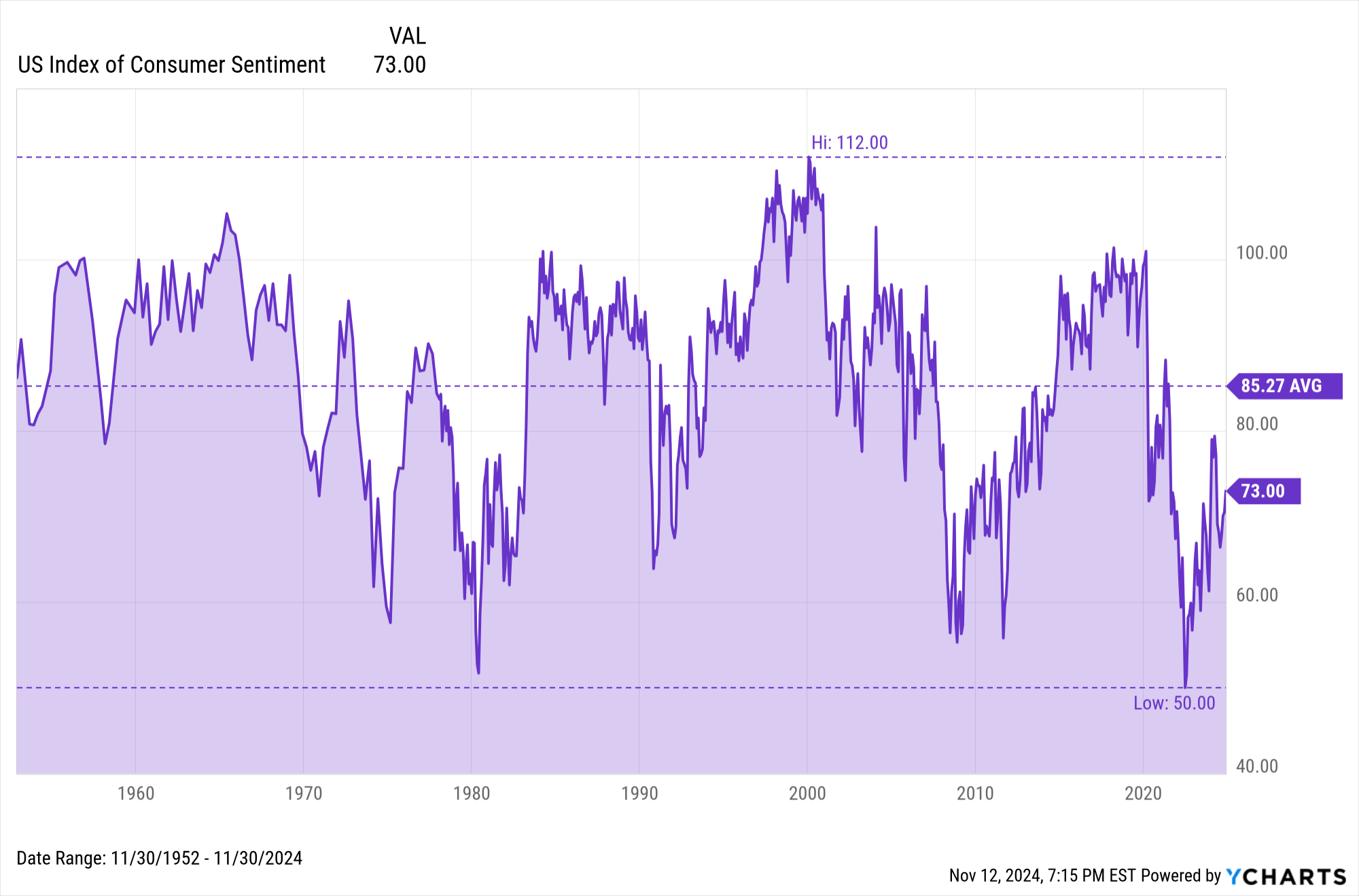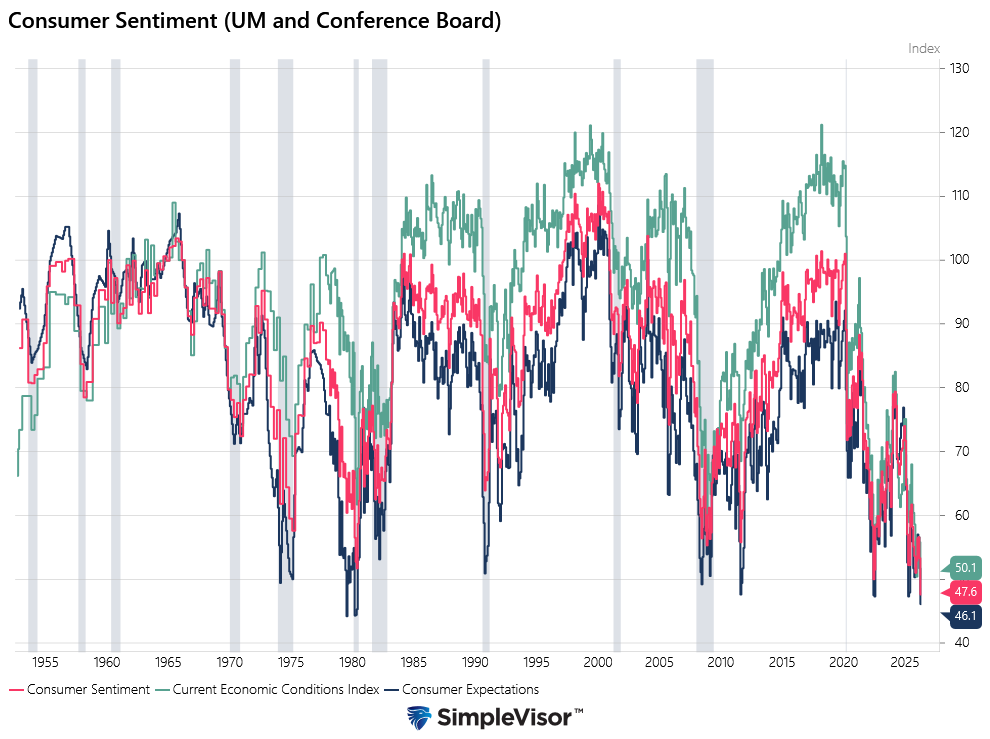
The University of Michigan’s Index of Consumer Sentiment hit an all-time low of 49.8 in April as a spike in fuel and commodity costs tied to the war in Iran knocked households’ mood into pessimism. The Reuters report ties the drop directly to higher gasoline and diesel prices after disruptions in the Strait of Hormuz, and the survey’s director, Joanne Hsu, says consumers respond to the conflict mainly through price shocks rather than diplomatic headlines.
That price shock showed up in consumers’ numbers: year-ahead inflation expectations jumped to 4.7 percent from 3.8 percent and five-year expectations rose as well, signaling households now expect higher costs to stick. The Wall Street Journal and the Michigan release note the reading is below levels seen during the pandemic and the 2022 inflation peak, underscoring how quickly sentiment has shifted despite stocks trading near highs.
Higher inflation expectations are more than a mood metric; they tilt policy and markets. Reuters cites a separate business-prices survey that pushed market bets toward fewer Federal Reserve rate cuts this year, and economists such as Grace Zwemmer at Oxford Economics warn that expensive gasoline will shave real disposable income and slow consumption growth, especially for lower- and middle-income households. Reuters and the Michigan data together make the case that weaker spending, not geopolitics alone, is the transmission channel to the economy.
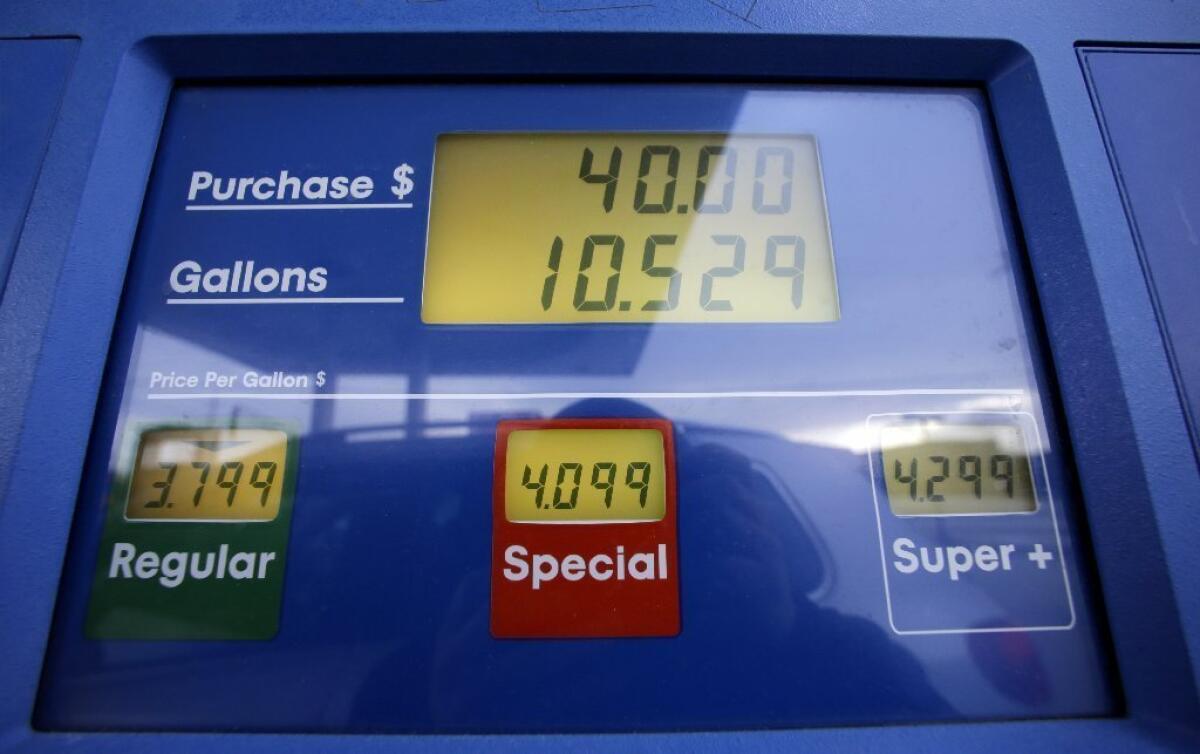
There are political and commercial consequences already taking shape. A Reuters/Ipsos poll found a majority of Americans blamed President Trump for rising pump prices, a dynamic that could ripple into midterm politics, while higher diesel costs threaten to lift retail prices for goods transported by road. The next movers to watch are energy flows through the Strait of Hormuz, further business-prices readings, and any shift in market expectations about Fed easing; each will determine whether this low in sentiment proves a short shock or the start of a longer drag on growth. Reuters WSJ