
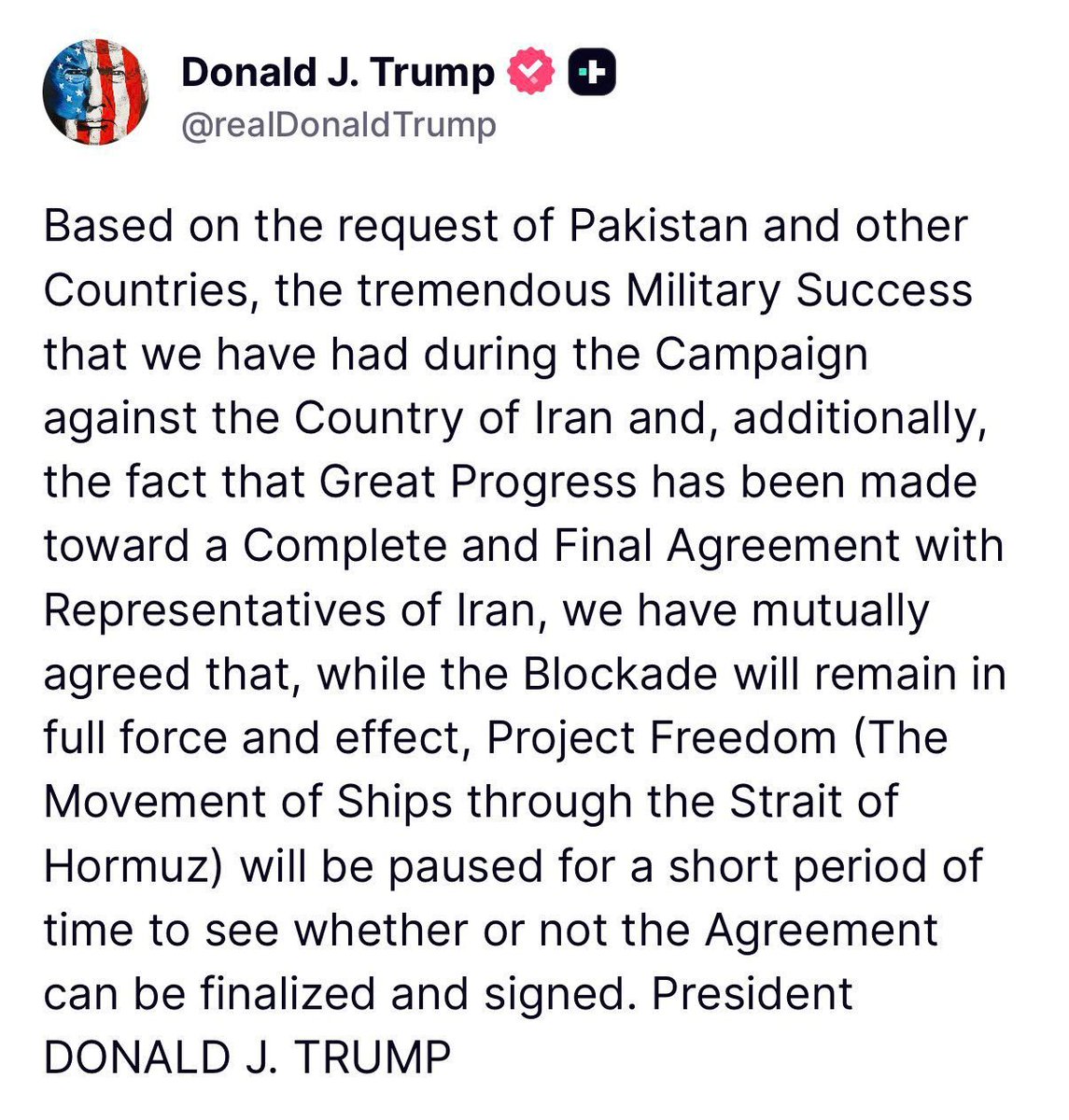
U.S. President Donald Trump warned Iran to "get moving, FAST" in a Sunday post on Truth Social, stating that "the Clock is Ticking" and time is of the essence. The message, which lacked specific demands or consequences, immediately impacted energy markets. Brent crude futures for July rose 1.34% to $110.72 per barrel, while West Texas Intermediate futures for June jumped 1.75% to $107.26 per barrel.
Markets under shadow
The escalation has revived concerns over global crude supplies as physical bottlenecks remain in place. While a fragile ceasefire was reached in early April, the U.S. has maintained its blockade of Iranian ports, and Iran continues to keep the Strait of Hormuz shut. These regional tensions have migrated into prediction markets, where analysts are identifying patterns that suggest trading on nonpublic information.
The investigation. Data analytics firm Bubblemaps identified nine connected accounts on Polymarket that netted over $2.4 million by betting on military outcomes with a 98% win rate. These accounts made winning wagers on specific dates for U.S. strikes and the announcement of a ceasefire, often when odds of winning were low. Federal investigators are now probing similar suspicious activity in the heavily regulated commodities markets, specifically focusing on large trades executed shortly before major policy announcements.
Commodity spikes and shifts
- More than $800 million was staked on oil prices dropping just 15 minutes before a previous Trump post regarding productive talks with Iran.
- Total wagers on military decisions and outcomes have surpassed $1 billion this year as traders use VPNs to bypass U.S. restrictions on war betting.
- Staffing and enforcement at the Commodity Futures Trading Commission (CFTC) have dropped significantly since 2024, leaving the agency to rely more on artificial intelligence to track bad actors.
The White House has issued a memo to staffers warning that using nonpublic information on prediction markets is a criminal offense. As geopolitical rhetoric tightens, the focus shifts to whether the Strait of Hormuz remains closed, a condition that continues to trap regional oil supply.


